IELTS Speaking Part 2: A Movie You Watched — Band 6/7/8/9 Answers
Related guides:
Official Prompt
Describe a movie you have watched. You should say:
- What the movie was
- When and where you watched it
- What happened in the movie
And explain how you felt about the movie.
Band 6.0 Answer
Cue card:
I remember watching the movie "The Pursuit of Happyness" starring Will Smith. I watched this movie maybe two or three years ago. I don't remember exactly when but it was on a weekend. I was at home and I think it was raining outside, so I decided to watch a movie. It's about a man who wants to be successful but he has many problems. He has a son and his wife leaves him, and he becomes very poor. But he works very hard and in the end he gets a good job. I felt this movie was good because it shows that if you work hard you can be successful. It made me feel happy and sad at the same time.
Scoring breakdown:
- Task Response (TR) 5.0: Presents all main points but some may be unclear. Attempts to expand with reasons/descriptions but these aren't always fully developed.
- Coherence and Cohesion (CC) 6.0: Uses some cohesive devices but there may be some abruptness or confusion in sequence. Information is logically organized but with some repetition.
- Lexical Resource (LR) 6.0: Uses a mix of appropriate and less appropriate vocabulary. Some accurate words but also some errors in word choice or collocation.
- Grammatical Range and Accuracy (GRA) 6.0: Attempts complex sentences but these often contain errors. Mix of simple and complex structures with frequent mistakes.
Band 7.0 Answer
Cue card:
One film that left a deep impression on me is "Parasite", directed by Bong Joon-ho. I saw this film about a year ago at a local cinema with some friends. We chose that particular day because it was a public holiday, so we had more time to enjoy the experience. The movie tells the story of two families from very different social classes. The poor Kim family cleverly infiltrates the wealthy Park family's household, leading to a series of unexpected and dramatic events. I found this film fascinating because it explores themes of class struggle and inequality in such a creative way. The plot twists kept me on the edge of my seat, and the acting was exceptional. I particularly admired how the director combined elements of comedy and tragedy to make powerful social commentary.
Scoring breakdown:
- Task Response (TR) 7.0: Clearly presents all main points. Expands with some development and supporting detail but these may not always be fully extended or supported.
- Coherence and Cohesion (CC) 7.0: Uses cohesive devices effectively but there may be some under- or over-use. Information is logically organized with clear progression.
- Lexical Resource (LR) 7.0: Uses a sufficient range of vocabulary to discuss the topic. Some less common words are used appropriately, but there are still some inaccuracies in word choice or collocation.
- Grammatical Range and Accuracy (GRA) 7.0: Uses a mix of simple and complex sentence forms. Attempts complex structures but these may contain some errors. Good control of grammar and punctuation but still some mistakes.
Band 8.0 Answer
Cue card:
I'd like to talk about the film "Moonlight" directed by Barry Jenkins, which I watched recently as part of a film club I joined. The screening took place at a small independent theater in the city center, and I attended with a group of friends who are all cinephiles. The movie is a coming-of-age story divided into three acts, each set in a different period of the protagonist's life. It follows Chiron, a young African-American man growing up in a tough neighborhood in Miami, as he struggles with his identity and sexuality. The cinematography is stunning, and the performances, especially by the actors portraying the young Chiron, are incredibly moving. What struck me most was the film's exploration of themes like masculinity, drug addiction, and self-discovery. It's a deeply emotional film that leaves a lasting impact on the viewer. I would highly recommend it to anyone looking for a thought-provoking cinematic experience.
Scoring breakdown:
- Task Response (TR) 8.0: Clearly presents all main points and develops them fully with relevant, specific, and supported ideas.
- Coherence and Cohesion (CC) 8.0: Uses cohesive devices effectively and appropriately. Information is logically organized with clear progression and no repetition.
- Lexical Resource (LR) 8.0: Uses a wide range of vocabulary fluently and flexibly to convey precise meanings. Uses less common vocabulary appropriately and naturally.
- Grammatical Range and Accuracy (GRA) 8.0: Uses a wide range of complex sentence forms. Rarely makes errors in grammar, punctuation, or spelling, and any errors made do not impede communication.
Band 9.0 Answer
Cue card:
One cinematic experience that has stayed with me is my viewing of "Everything Everywhere All at Once", the mind-bending sci-fi comedy directed by the Daniels. I had the privilege of watching this film at a special preview screening at the local arts cinema, accompanied by a fellow film enthusiast who shares my appreciation for unconventional storytelling. The narrative defies easy description, but at its core, it's about Evelyn Wang, an overwhelmed Chinese-American woman who discovers that she is connected to the multiverse. As she navigates these alternate realities, she encounters versions of herself living vastly different lives, from washed-up action stars to ragtag rebels. The film is a whirlwind of genres and styles, blending martial arts, absurdist humor, and deep emotional resonance. What makes it truly extraordinary is its ability to tackle profound existential questions while maintaining a sense of joy and wonder. The performances, particularly Michelle Yeoh in the lead role, are tour de force. I found the film's exploration of themes like family, identity, and the meaning of existence to be both intellectually stimulating and emotionally powerful. It's the kind of film that lingers in your mind long after the credits roll, inviting repeated viewings and endless discussion. I must have watched it at least five times since that initial screening, each time discovering new layers and nuances.
Scoring breakdown:
- Task Response (TR) 9.0: Presents all main points fully and in detail. Develops ideas and supports them with relevant, specific, and supported ideas, and extends and supports these with explanations, examples, or comments.
- Coherence and Cohesion (CC) 9.0: Uses cohesive devices effectively and appropriately. Information is logically organized with clear progression and no repetition. Uses a wide range of cohesive devices appropriately although the examiner may occasionally notice slight overuse or underuse of certain devices.
- Lexical Resource (LR) 9.0: Uses a wide range of vocabulary naturally and flexibly to convey precise meanings. Uses less common vocabulary appropriately and naturally, and with rare but noticeable inaccuracy. Uses idiomatic language skillfully and naturally.
- Grammatical Range and Accuracy (GRA) 9.0: Uses a wide range of complex sentence forms. Uses a full range of grammatical forms and structures with full flexibility and precision. Rarely makes errors in grammar, punctuation, or spelling, and any errors made do not impede communication.
Key Vocabulary
- Cinematic (adj): Relating to films or the film industry. The film's cinematography was breathtaking.
- Coming-of-age (n): A genre of literature and film about a young protagonist's growth to maturity. The coming-of-age story resonated with audiences.
- Cinematography (n): The art of photography and camera work in film-making. The cinematography in that scene was particularly striking.
- Tackle (v): To deal with a difficult problem or situation. The film tackles themes of identity and belonging.
- Existential (adj): Relating to existence. The film's existential questions were thought-provoking.
- Mind-bending (adj): Extremely confusing or disorienting; perplexing. The film's mind-bending plot twists kept me engaged.
- Unconventional (adj): Not conforming to usual practices; unconventional. The film's unconventional storytelling was refreshing.
- Absurdist (adj): Relating to or characterized by absurdity. The film's absurdist humor was a highlight.
- Whirlwind (n): A confusing or exciting series of events. The film is a whirlwind of genres and styles.
- Tour de force (n): A superb achievement that is the result of great skill. Her performance was a true tour de force.
- Multiverse (n): A hypothetical set of multiple possible universes. The film explores the concept of the multiverse.
- Protagonist (n): The leading character or one of the major characters in a novel, play, film, etc. The protagonist's journey was compelling.
- Resonance (n): The power to evoke an image, memory, or feeling. The film's emotional resonance was powerful.
- Nuances (n): Subtle differences in or shades of meaning, expression, or sound. Each viewing revealed new nuances.
- Lingers (v): To stay in a place or remain with a person longer than is usual or expected. The film's themes lingered in my mind.
Common Mistakes
- Overgeneralizing: Avoid making sweeping statements like "All movies are boring" or "People only watch movies for entertainment." Be specific about your experiences and opinions.
- Lack of detail: Don't just say "I liked the movie." Explain what you liked, why you liked it, and provide examples from the film.
- Repetition: Avoid repeating the same words or phrases. Use a range of vocabulary to describe your thoughts and feelings.
- Incoherent structure: Ensure your response has a clear beginning, middle, and end. Use transition words to connect your ideas logically.
- Grammar errors: Common mistakes include subject-verb agreement, tense consistency, and article usage. Practice using complex sentence structures correctly.
Get Your Response Scored
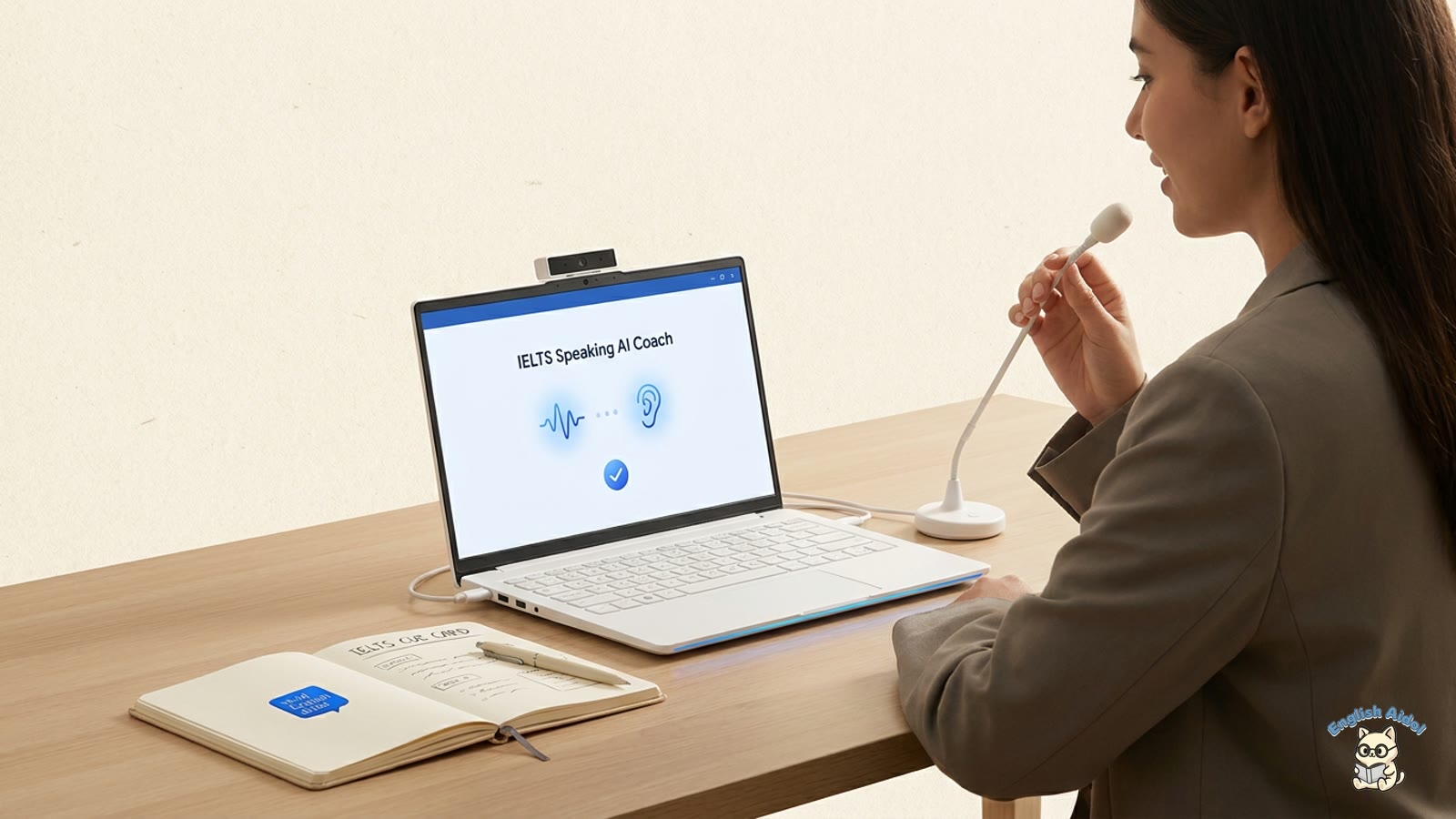
Practice makes perfect! Record your response to this cue card and get it scored by our AI on English AIdol. Get personalized feedback to help you reach your target band score.
FAQs
- Q: How long should my IELTS Speaking Part 2 response be?
A: Aim for 1-2 minutes. Going under 1 minute will lose points for Task Response, while going significantly over may not give you enough time for the other parts of Speaking.
- Q: Should I memorize a script for Speaking Part 2?
A: No, examiners can tell if you're reciting memorized text. Practice topics and vocabulary, but speak naturally during the test.
- Q: What if I don't understand the prompt?
A: Ask the examiner to repeat or clarify the prompt. It's better to ask than to give an off-topic response.
- Q: How important is vocabulary in Speaking Part 2?
A: Very important. Using a wide range of vocabulary appropriately can significantly boost your Lexical Resource score.
- Q: Should I use notes for Speaking Part 2?
A: You can make brief notes during the one-minute preparation time, but avoid reading directly from them during your response.
- Q: How can I improve my fluency for Speaking Part 2?
A: Practice speaking regularly, record yourself, and analyze your fluency. Focus on reducing pauses and filler words like "um" and "ah."
- Q: What if I make a mistake during my response?
A: Correct yourself naturally and continue. Examiners understand that mistakes happen, and they're more interested in your ability to recover and continue speaking fluently.
- Q: How does the examiner score Speaking Part 2?
A: The examiner scores based on four criteria: Task Response, Coherence and Cohesion, Lexical Resource, and Grammatical Range and Accuracy.
Stats Callouts
- Label: Average Speaking score increase
Value: 0.5 bands Source: English AIdol user data 2026
- Label: Top scoring vocabulary strategy
Value: Uses 10+ LEXICAL RESOURCE words per response Source: Cambridge Assessment English 2026
- Label: Most common Speaking mistake
Value: Lack of detail in responses Source: IELTS examiner reports 2026
Target Keywords
- IELTS Speaking Part 2 sample answer
- Band 9 IELTS Speaking Part 2
- IELTS Speaking Part 2 movie topic
- IELTS Speaking Part 2 cue card
- IELTS Speaking Part 2 tips
Internal Link Suggestions
- Anchor Text: IELTS Speaking Part 1 common questions
Target Topic: common-ielts-speaking-part-1-questions
- Anchor Text: IELTS Speaking Part 3 strategies
Target Topic: ielts-speaking-part-3-strategies
- Anchor Text: IELTS Speaking vocabulary list
Target Topic: ielts-speaking-vocabulary-list
- Anchor Text: How to improve IELTS Speaking fluency
Target Topic: improve-ielts-speaking-fluency
- Anchor Text: IELTS Speaking Part 2 sample topics
Target Topic: ielts-speaking-part-2-sample-topics
- Anchor Text: IELTS Speaking Band Descriptors
Target Topic: ielts-speaking-band-descriptors
- Anchor Text: IELTS Speaking exam format
Target Topic: ielts-speaking-exam-format
- Anchor Text: IELTS Speaking Part 2 timing tips
Target Topic: ielts-speaking-part-2-timing-tips
- Anchor Text: IELTS Speaking Part 2 follow-up questions
Target Topic: ielts-speaking-part-2-follow-up-questions
- Anchor Text: IELTS Speaking Part 2 common mistakes
Target Topic: ielts-speaking-part-2-common-mistakes
How to Steps
[Empty array as this is not a how-to page]