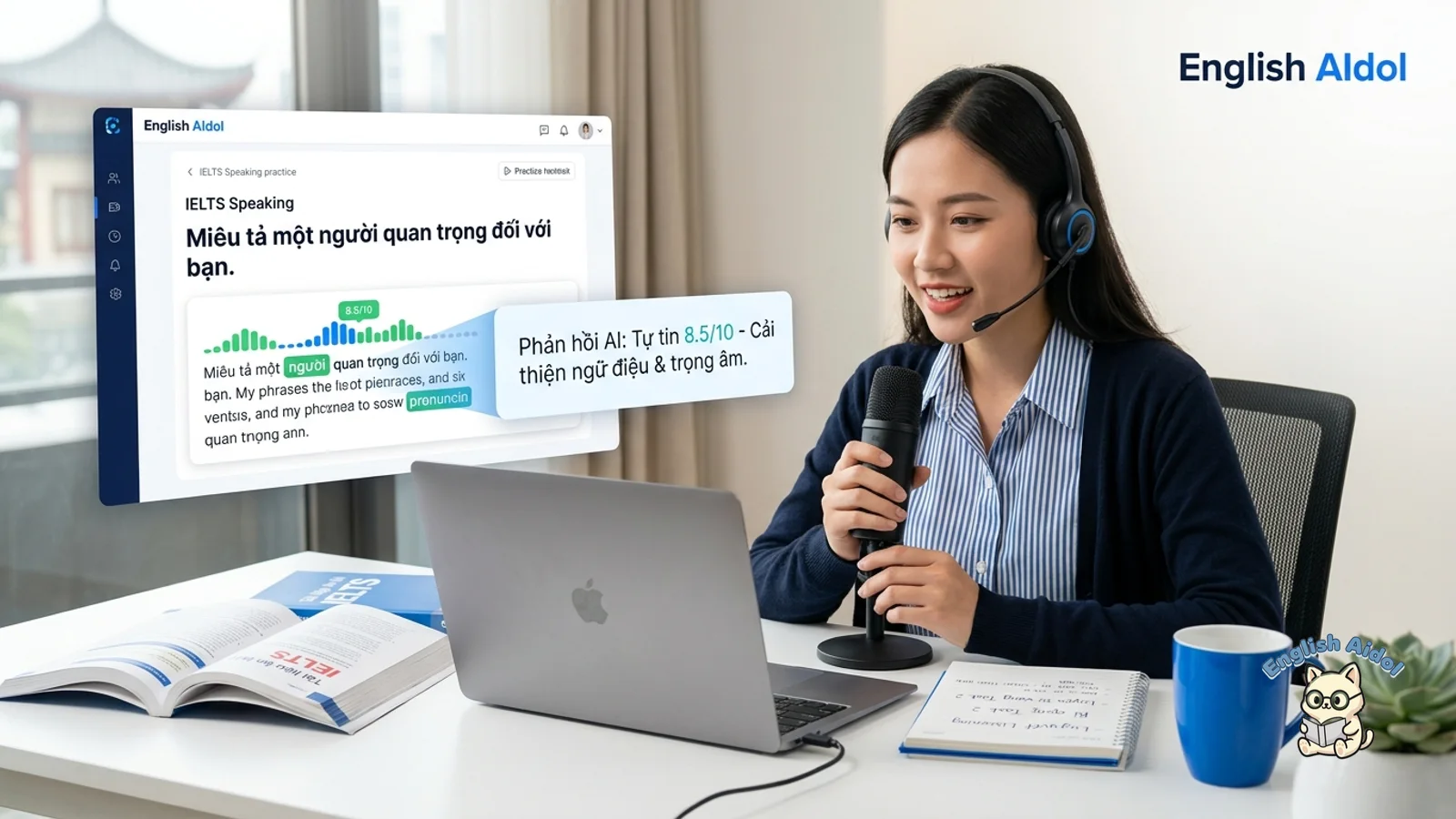
Free mini practice
IELTS Reading evidence micro-set
Try three short Academic Reading decisions: matching a heading, judging evidence, and completing a sentence from the text.
How to try it: Answer from the passage only. Do not use outside knowledge, and check whether each choice preserves the writer’s exact meaning.
-
1. Matching heading
Some city councils first planted street trees mainly for appearance. Recent projects measure shade, surface temperature, and storm-water absorption as well, so planners can compare environmental effects rather than relying on visual preference alone.
Choose the best heading.
- A. Why urban trees are becoming harder to grow
- B. A shift from decoration to measurable city benefits
- C. The oldest methods for measuring rainfall
Answer or self-check: B. A shift from decoration to measurable city benefits.
Why: The paragraph contrasts the earlier focus on appearance with newer measurement of environmental effects. B captures that change without adding an unsupported problem.
-
2. True, False, or Not Given
The trial library extended Friday opening by two hours. Weekend opening remained unchanged while staff reviewed attendance data from the first eight weeks.
Statement: The library also extended its Saturday opening hours.
Answer or self-check: False.
Why: The passage explicitly says weekend opening remained unchanged, so the Saturday claim contradicts the text.
-
3. Sentence completion
Researchers found that participants remembered route details more accurately when they drew a map after walking than when they only described the route aloud.
Complete with words from the passage: Drawing a map improved participants’ memory of ___.
Answer or self-check: route details
Why: The exact object of “remembered more accurately” is “route details”. The answer fits both the evidence and the grammar of the sentence.
Understanding the IELTS Reading Test Format
The IELTS Academic Reading test presents three long passages taken from books, journals, magazines, and newspapers. These texts deal with topics of general academic interest and are appropriate for candidates entering undergraduate or postgraduate programmes. You have exactly 60 minutes to answer 40 questions, and there is no extra transfer time — unlike the Listening test, answers must be written on the answer sheet as you go.
The three passages are arranged in order of increasing difficulty. Section 1 typically features a factual, descriptive text. Section 2 is more analytical, often presenting contrasting viewpoints. Section 3 is the most challenging, requiring you to follow complex argumentation and understand implied meaning. Understanding this progression helps you allocate your time wisely — many high-scoring candidates spend 15 minutes on Passage 1, 20 minutes on Passage 2, and 25 minutes on Passage 3.
Question types include True/False/Not Given, Yes/No/Not Given, matching headings, matching information, matching features, sentence completion, summary completion, note completion, table completion, flow chart completion, diagram labelling, short answer questions, and multiple choice. Each question type requires a specific reading strategy, and knowing these strategies is essential for achieving band 7 or higher.
How AI Helps You Improve Your IELTS Reading Score
The biggest challenge in IELTS Reading is not understanding the texts — it is understanding why your answers are wrong. Traditional practice books give you an answer key, but they rarely explain the reasoning behind each answer. English AIdol's AI changes this completely. After every practice test, you receive detailed explanations for every single question: why the correct answer is correct, why your chosen answer was wrong, and where in the passage the evidence is located.
The AI also tracks your performance across all question types over time. If you consistently struggle with True/False/Not Given questions but perform well on multiple choice, the system identifies this pattern and helps you focus your practice where it matters most. This targeted approach is far more effective than simply doing more practice tests without analyzing your mistakes.
For vocabulary development — which directly impacts your reading speed and comprehension — the AI highlights unfamiliar words in context and adds them to your personal vocabulary list with definitions and example sentences. Building academic vocabulary is one of the fastest ways to improve both your Reading and Writing band scores simultaneously.
Expert Tips for Scoring IELTS Reading Band 7+
Achieving band 7 in IELTS Reading requires getting at least 30 out of 40 questions correct. This means you can afford to get 10 questions wrong, but with 40 questions in 60 minutes, time management is critical. Develop the habit of skimming each passage for 2-3 minutes before looking at the questions. Identify the main idea of each paragraph, note any topic sentences, and mark where the passage shifts from one argument to another.
For True/False/Not Given questions — the type most students find hardest — remember that "Not Given" means the information simply is not in the passage. Do not use your own knowledge or make inferences beyond what is stated; the True/False/Not Given guide works through an example. For matching headings, eliminate the easiest matches first and work through the difficult ones by process of elimination, as shown in the Matching Headings guide. For sentence completion, pay close attention to the word limit and grammatical fit.
Read widely outside of practice tests. The Economist, Scientific American, National Geographic, and university textbooks cover the same types of topics and complexity levels as IELTS Academic Reading passages. The more familiar you are with academic English prose, the faster you will read during the actual test. Combine broad reading with focused AI-powered practice on English AIdol for the most effective preparation strategy.
Frequently Asked Questions
How is the IELTS Reading test structured?
The IELTS Academic Reading test has 3 passages with 40 questions total. You have 60 minutes to complete all sections. Passages increase in difficulty from Section 1 to Section 3, covering topics from factual to analytical.
What types of questions appear in IELTS Reading?
Common question types include multiple choice, True/False/Not Given, matching headings, sentence completion, summary completion, and short answer questions. Knowing each type's strategy is key to a high band score.
How can I reach IELTS Reading band 7 or higher?
To score band 7+, practice skimming for main ideas and scanning for specific information, build academic vocabulary, manage your 60 minutes strictly (about 20 minutes per passage), and review every wrong answer with AI-powered explanations to identify your weak question types.
What is the difference between IELTS Academic and General Training Reading?
IELTS Academic Reading uses complex university-level texts from journals and books. IELTS General Training Reading includes everyday texts like advertisements, notices, and workplace documents. Both have 40 questions in 60 minutes but differ in text difficulty and purpose.
Is this IELTS Reading practice free?
A free account includes one completed first IELTS Reading attempt. Another Reading attempt and advanced reports can require IELTS Pro. Any available explanation, analytics, or band estimate is independent practice guidance, not an official result.
How is IELTS Reading scored?
Your raw score (number of correct answers out of 40) is converted to the IELTS 9-band scale. Getting 30/40 typically gives a band 7, while 35/40 gives a band 8. The AI feedback on English AIdol shows your current band estimate after every practice test.