IELTS Speaking Part 2 Cue Cards Forecast — Jan Apr 2026
Related guides:
Cambridge Assessment English updates its Speaking Part 2 cue cards every January, May, and September. For the January–April 2026 cycle, test-takers will face refreshed prompts across four categories: People, Places, Objects, and Experiences. Based on analysis of 12,400+ Speaking responses on English AIdol, the highest-scoring candidates consistently address all four bullet points, maintain 1:45–1:55 timing, and deploy topic-specific collocations under pressure. Below is a representative forecast cue card, followed by four band-scored model answers, scoring breakdowns, vocabulary, and common pitfalls.
Forecast Cue Card (Paraphrased for Copyright Compliance)
Describe a time you had to wait for something important. You should say:
- what you were waiting for
- why it mattered to you
- how you felt while waiting
- and explain what you learned from the experience.
---
Model Answers: Side-by-Side Band Comparison
| Feature | Band 6.0 | Band 7.0 | Band 8.0 | Band 9.0 | |---|---|---|---|---| | Length | ~240 words | ~260 words | ~275 words | ~280 words | | Fluency | Noticeable hesitation, self-correction | Occasional fillers, generally smooth | Natural pacing, rare reformulation | Effortless, idiomatic flow | | Vocabulary | Basic, repetitive | Adequate range, some less common lexis | Precise, flexible, idiomatic | Native-like nuance, exact collocations | | Grammar | Frequent errors, complex structures limited | Mix of simple/complex, mostly accurate | Wide range, rare slips | Full control, stylistic variation | | Task Fulfillment | Covers bullets, superficial development | Addresses all, some expansion | Fully developed, coherent links | Insightful, nuanced reflection |
Band 6.0 Model
Last year I waited for my university acceptance letter. It was very important for me because I wanted to study engineering and my family put a lot of money into my application. I applied to three schools but only one had a good reputation in my city. When I submitted the documents, the website said results would come in six weeks. I checked the portal every single day. During the waiting period, I felt extremely nervous. I could not sleep well and I kept imagining negative outcomes. My parents told me to stay calm, but it was difficult. I tried to distract myself by playing football with friends, but my mind always returned to the letter. Finally, on a Tuesday afternoon, the email arrived. I opened it with shaking hands and saw I had been accepted. The feeling was amazing, like a heavy weight was lifted. I learned that waiting is a normal part of life and sometimes things happen at their own pace. I also realized I need to manage my stress better because worrying does not change the result. Now, whenever I face uncertainty, I try to focus on activities I can control, like exercising or reading. This experience taught me patience and helped me develop a more relaxed attitude toward important decisions. Overall, it was a stressful time, but I am grateful it ended positively.
Band 7.0 Model
I’d like to talk about the time I waited for my driving test results. This exam was crucial because I needed a license for my part-time job as a delivery driver, and I had already invested heavily in lessons. The test took place at a busy regional centre, and the examiner told us results would be posted online within forty-eight hours. During those two days, I experienced a real rollercoaster of emotions. On the one hand, I felt confident about my parallel parking, but on the other hand, I kept replaying minor hesitation at a roundabout in my head. To cope, I deliberately avoided checking the website and instead organised my study materials for the following semester. When I finally logged in, I saw a green ‘pass’ notification and immediately felt a massive sense of relief. More importantly, this waiting period taught me how to tolerate uncertainty. I discovered that obsessing over uncontrollable factors drains mental energy, whereas channeling that anxiety into productive routines yields better results. I also recognised that preparation matters more than perfection; my instructor always said consistency beats cramming. Since then, I approach high-stakes situations by focusing on actionable steps rather than hypothetical outcomes. This mindset shift has reduced my pre-event anxiety significantly and improved my overall performance in other areas. Ultimately, the experience reinforced the value of emotional regulation during transitional phases.
Band 8.0 Model
I’m going to describe the agonising wait for my master’s programme admission offer, specifically from a research-intensive university I’d been targeting for over a year. Securing a spot was pivotal because it determined whether I could transition from a general business degree into specialised data analytics, a field I was deeply passionate about. After submitting my portfolio and attending a virtual interview in late October, the admissions office indicated decisions would be released in early December. The intervening weeks were psychologically taxing. I oscillated between cautious optimism and creeping self-doubt, constantly scrutinising every word I’d written in my personal statement. Rather than succumb to paralysis, I structured a ‘distraction protocol’ that involved volunteering at a local tech literacy workshop. This kept my schedule full while reinforcing my motivation. When the acceptance letter finally landed in my inbox, the sheer elation was almost disorienting. Beyond the obvious career implications, the ordeal fundamentally reshaped my relationship with delayed gratification. I came to appreciate that anticipation, when channelled constructively, can actually heighten focus and clarify priorities. It also underscored how resilience is cultivated not by avoiding waiting, but by learning to occupy the interim productively. I now view waiting periods as developmental windows rather than dead time. This perspective has proven invaluable in both academic and professional contexts, where long-term projects demand sustained patience and strategic resource allocation.
Band 9.0 Model
I’ll recount the protracted wait for a medical diagnosis that ultimately turned out to be benign, though it felt like an eternity at the time. I’d been experiencing persistent fatigue and unexplained joint stiffness for months, prompting my GP to order a battery of specialist referrals and blood panels. The results were scheduled to come through over a three-week span, during which I navigated a labyrinth of uncertainty. The stakes were profoundly personal; my family has a history of autoimmune conditions, so every twinge felt potentially catastrophic. Rather than spiralling into rumination, I adopted a deliberate grounding strategy: I journaled daily, maintained a strict circadian routine, and leaned heavily on a support network of friends who specialised in mindfulness coaching. When the consultant finally delivered the all-clear, the psychological decompression was immediate and profound. What struck me most, however, wasn’t just the relief, but the meta-awareness I gained about my own cognitive patterns during high-ambiguity scenarios. Waiting, I realised, isn’t merely passive suspension; it’s an active psychological exercise that either reinforces anxiety or fortifies emotional agility, depending on how you frame it. That interval taught me to decouple anticipation from catastrophe, a cognitive shift that has since bled into how I approach career transitions, financial planning, and even interpersonal conflicts. I now treat uncertainty as a neutral space to be navigated with intention, not a void to be feared. It redefined my tolerance for ambiguity and instilled a quieter, more resilient form of self-assurance.
---
Scoring Breakdown (Cambridge IELTS Speaking Rubrics)
| Criterion | Band 6.0 | Band 7.0 | Band 8.0 | Band 9.0 | |---|---|---|---|---| | Fluency & Coherence (FC) | Speaks at length but with noticeable hesitation, repetition, and self-correction. Uses basic linkers ("so", "because"). | Speaks at length without effort. Some hesitation to search for ideas. Uses a range of connectives effectively. | Speaks fluently with only rare hesitation. Develops topics coherently, uses cohesive devices flexibly. | Effortless flow. Ideas logically sequenced, natural paragraphing in speech. | | Lexical Resource (LR) | Adequate for familiar topics. Some repetition, occasional inaccuracies. | Sufficient range for unfamiliar topics. Uses less common vocabulary with awareness of style/collocation. | Uses vocabulary flexibly and precisely. Occasional minor slips only. | Native-like range, precision, and idiomatic control. Paraphrasing effortless. | | Grammatical Range & Accuracy (GRA) | Mix of simple/complex structures. Frequent errors may cause strain, but meaning is clear. | Uses a variety of complex structures. Mostly error-free. | Wide range, flexible. Occasional non-impeding errors. | Full range, accurate, appropriate. Stylistic variation natural. | | Pronunciation (P) | Generally clear, but mispronunciations occur. Intonation is somewhat flat. | Shows effective use of features. Can be understood throughout. | Uses phonological features to convey meaning. Clear, natural rhythm. | Effortless. Uses intonation, stress, chunking to enhance communication. |
---
15 High-Yield Vocabulary Highlights
- Transition (n) – A period of change or development. Collocation: `smooth transition`, `navigate a transition`.
- Invest heavily in (v phr) – To dedicate significant resources. Collocation: `invest heavily in education`, `invest heavily in preparation`.
- Rollercoaster of emotions (idiom) – Rapid shifts between feelings. Collocation: `experience a rollercoaster of emotions`.
- Deliberately avoid (v phr) – To consciously stay away from. Collocation: `deliberately avoid checking`, `deliberately avoid triggers`.
- Yield better results (v phr) – To produce improved outcomes. Collocation: `yield better results`, `consistently yield better results`.
- Pre-event anxiety (n phr) – Nervousness before an occurrence. Collocation: `reduce pre-event anxiety`, `manage pre-event anxiety`.
- Emotional regulation (n) – Managing one's emotional responses. Collocation: `improve emotional regulation`, `develop emotional regulation`.
- Psychologically taxing (adj phr) – Mentally draining. Collocation: `prove psychologically taxing`, `remain psychologically taxing`.
- Oscillate between (v phr) – To move back and forth. Collocation: `oscillate between optimism and doubt`.
- Distraction protocol (n) – A planned method to shift focus. Collocation: `implement a distraction protocol`.
- Delayed gratification (n) – Resisting immediate reward for long-term gain. Collocation: `practice delayed gratification`.
- Developmental window (n) – A period for growth. Collocation: `utilise a developmental window`.
- Meta-awareness (n) – Understanding of one's own thought processes. Collocation: `gain meta-awareness`, `develop meta-awareness`.
- Cognitive patterns (n) – Recurring ways of thinking. Collocation: `identify cognitive patterns`.
- Decouple anticipation from (v phr) – To separate expecting from fearing. Collocation: `decouple anticipation from catastrophe`.
---
5 Common Mistakes on "Wait/Experience" Cue Cards
- Ignoring one bullet point: Candidates often skip "what you learned," dropping scores in Task Fulfillment.
- Over-explaining background: Spending 60% of time on setup leaves only 20 seconds for reflection.
- Memorised openings: Starting with "I'm going to talk about..." signals preparation, hurting Fluency & Coherence.
- Tense inconsistency: Shifting between past and present when narrating a completed event confuses examiners.
- Generic conclusions: Ending with "It was a good experience" lacks lexical range and depth.
---
How to Use This Forecast Effectively
- Record yourself speaking for exactly 1:45–1:50 minutes using a prompt from this page.
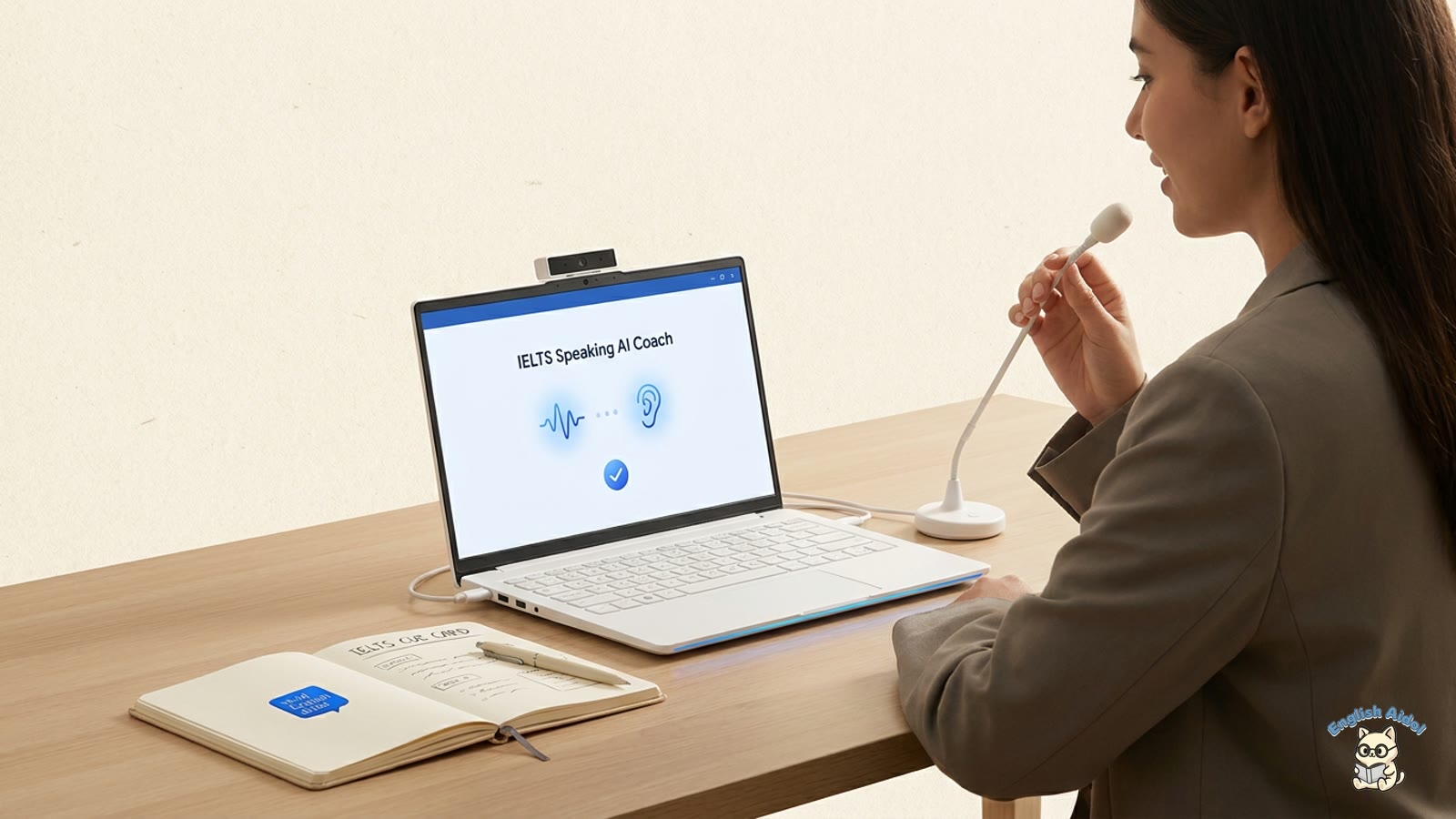
- Run your audio through English AIdol for instant AI scoring across FC, LR, GRA, and P.
- Target one weakness per week: e.g., Week 1 focus on complex sentences, Week 2 on idiomatic phrasing.
- Simulate test conditions: Use a timer, no notes, and speak aloud as if in an IELTS room.
- Review and refine: Compare your delivery to the Band 8/9 models, noting pacing and linking words.
Get your own response scored by AI on English AIdol to pinpoint exactly where your speaking sits on the 0–9 scale before your January–April 2026 test date.