Simpler vs More Developed Sample Answers
These examples illustrate different levels of development; they are not official scored responses and a real band depends on performance across the full test.
Q: Do you enjoy cooking?
Simpler response
"Yes, I like cooking. I cook dinner every day. I think it is a good hobby."
More developed response
"Honestly, I'm quite into cooking — I find it relaxing after a long day at work. I mostly cook Asian dishes since I grew up with them, but I've been experimenting with Italian food recently. It's become a bit of a weekend ritual for me."
What it demonstrates: The more developed response uses an idiomatic phrase ("quite into"), descriptive detail, present perfect, and a natural discourse marker.
Q: How do you usually spend your weekends?
Simpler response
"I usually stay at home on weekends. Sometimes I go out with my friends. I watch TV or play games."
More developed response
"My weekends tend to vary quite a bit. During the day I usually catch up on errands or meet friends for brunch, but in the evenings I prefer something quieter — maybe reading or watching a documentary. I find I need that downtime to recharge for the working week."
What it demonstrates: The more developed response uses varied verbs ("tend to vary", "catch up on", "recharge"), natural discourse flow, and contrast.
Q: What kind of music do you like?
Simpler response
"I like pop music. I listen to music every day. My favourite singer is BTS."
More developed response
"I'm quite eclectic when it comes to music — it really depends on my mood. For working I'll put on something instrumental like lo-fi or jazz, but when I'm exercising I prefer upbeat K-pop or hip-hop. I think music has a huge influence on how you feel, so I'm pretty deliberate about what I listen to."
What it demonstrates: The more developed response uses flexible sentence patterns, lexical variety ("eclectic", "deliberate"), and extended reasoning.
Q: Do you use public transport?
Simpler response
"Yes, I use the bus every day to go to work. It is cheap. Sometimes it is slow but I like it."
More developed response
"I rely on public transport pretty heavily actually — mostly the subway and occasional buses. It is a bit unpredictable during rush hour, but honestly I prefer it to driving in city traffic. I use the time to read or listen to podcasts, so it doesn't feel wasted at all."
What it demonstrates: The more developed response uses precise adverbs, concession and contrast, and a relevant personal detail.
Q: What do you do to stay healthy?
Simpler response
"I try to exercise every day. I also eat healthy food. I think health is very important for everyone."
More developed response
"I try to keep a reasonable balance, to be honest. I go for a run three or four times a week and I've been more mindful about what I eat lately — cutting back on processed food mostly. I wouldn't say I'm super disciplined about it, but I notice a real difference in my energy levels when I keep it up."
What it demonstrates: The more developed response uses hedging, present perfect, and specific self-reflection rather than a generic script.
Q: Describe your hometown.
Simpler response
"My hometown is Seoul. It is a very big city in South Korea. There are many people there. It has good food and shopping."
More developed response
"I grew up in Seoul, which is this enormous, fast-paced city in the centre of South Korea. What I love about it is how it manages to feel both ultra-modern and deeply traditional at the same time — you can have cutting-edge tech infrastructure alongside centuries-old palaces in the same neighbourhood. It's a bit overwhelming if you're not used to it, but I find the energy quite addictive."
What it demonstrates: The more developed response uses a relative clause, clear contrast, specific detail, and natural evaluative language.
Vocabulary Bank by Topic
Learn these phrases and use them naturally — don't recite them as a list, weave them into your answers.
Hometown
bustling city
quiet suburb
close-knit community
urban sprawl
nostalgic
culturally diverse
Work / Studies
demanding
rewarding
specialise in
juggle responsibilities
deadline-driven
collaborative environment
Hobbies
passionate about
unwind
therapeutic
I'm quite into
pick up (a skill)
immerse myself in
Food
culinary
savory / sweet tooth
home-cooked meals
indulge in
acquired taste
staple dish
Technology
heavily reliant on
digital detox
connectivity
scroll through
streamline tasks
double-edged sword
Common Part 1 Mistakes to Avoid
One-word answers
Add a relevant reason or detail when appropriate so the examiner has enough language to assess; there is no automatic band cap for one short response.
Memorised scripts
Examiners test for spontaneous speech. Practise flexible building blocks, not full scripts.
Starting every answer with "I think that..."
Vary your openers: "Honestly...", "To be fair...", "Well, actually...", "Funnily enough..."
Speaking too fast to hide mistakes
Speak at a natural pace. Slowing down 10% gives you time to use better vocabulary and grammar.
Translating directly from your first language
Build an English thinking habit. Practise describing your day in English internally.
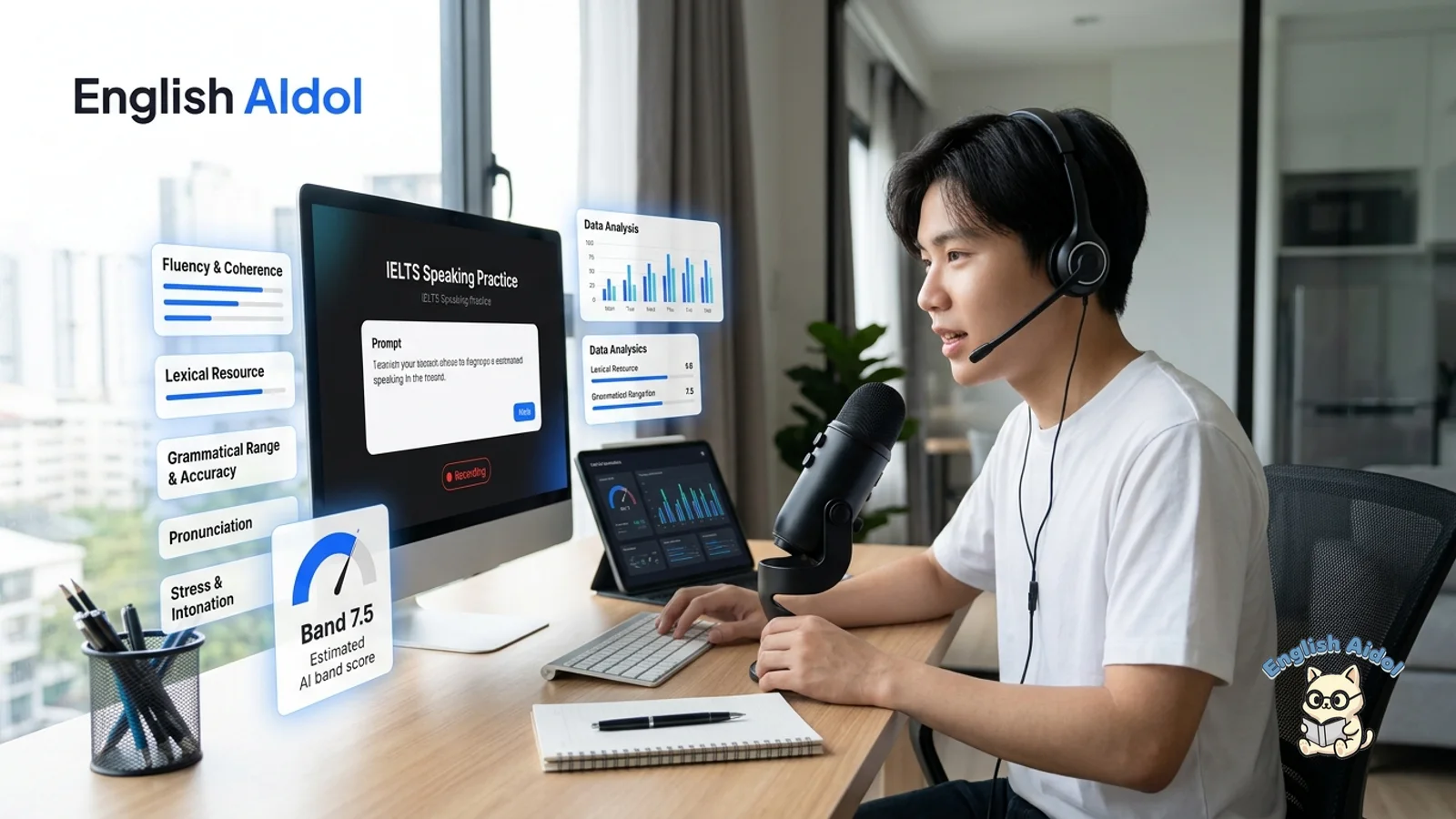
Practice IELTS Speaking Part 1 with AI Feedback
Record your answers and review AI feedback based on Fluency, Vocabulary, Grammar, and Pronunciation. Any band shown is an unofficial practice estimate.
Start Speaking Practice Free
How to Answer Part 1 Naturally
Start with a direct answer, then add one reason or example. This keeps the response conversational while still showing vocabulary and grammar range. Avoid memorised speeches; Part 1 should sound relaxed and personal.
A useful pattern is: answer the question, add a detail, then explain why. For example, if asked about your hometown, mention one real feature and one personal feeling instead of giving a generic description.
Common Part 1 Topic Groups
Frequent IELTS Speaking Part 1 topics include work or study, home, family, hometown, weather, music, sport, shopping, technology, food, transport, weekends, and daily routines. Prepare flexible ideas for each group rather than memorising full answers.
Frequently Asked Questions
What is IELTS Speaking Part 1?
IELTS Speaking Part 1 lasts 4–5 minutes. The examiner asks questions about familiar topics such as your home, family, work or studies, interests, and daily life. There is no required sentence or word count for each response; answer the question naturally and add enough relevant detail to demonstrate your English.
How long should my IELTS Speaking Part 1 answers be?
IELTS does not prescribe a sentence or word count for Part 1 answers. A direct answer followed by a relevant reason, detail, or brief example often provides enough language without turning the response into a long monologue. Avoid relying only on "Yes" or "No" because that gives the examiner little evidence to assess.
What topics come up in IELTS Speaking Part 1?
The most frequent Part 1 topics are: Hometown (describe, what you like/dislike), Home (type of accommodation, favourite room), Work or Studies (job role, subjects, future plans), Hobbies & Free Time (sports, reading, games, cooking), Food & Eating (favourite cuisine, cooking, eating out), Transport (how you travel, traffic, cycling), Friends & Family (close friends, family time), Weather & Seasons (preferred weather, climate where you live), Shopping (online vs in-store, frequency), and Technology (phone use, social media habits). Preparing 3–4 flexible answers for each area covers most Part 1 questions.
What mistakes do people make in IELTS Speaking Part 1?
Common Part 1 problems include answers that are too brief to show much language, memorised scripts that do not fit the question, unnecessarily formal wording, repeated vocabulary, and pauses that interrupt communication. A one-word response does not create an automatic band cap, but it gives the examiner very little evidence to assess. Practise direct, relevant answers with a reason, detail, or brief example when appropriate.
How do I improve my IELTS Part 1 score?
To improve Part 1, practise speaking aloud about familiar topics, record comparable answers, and review repeated issues in fluency, vocabulary, grammar, and pronunciation. Build useful topic vocabulary and use discourse markers only when they fit naturally. English AIdol can provide AI practice feedback, but any band shown is an unofficial estimate rather than an official IELTS score.
Should I ask the examiner to repeat a question in Part 1?
You can ask the examiner to repeat a question if you did not hear it. The examiner may repeat the wording but cannot explain unfamiliar vocabulary or rephrase the question for you. There is no separate Listening score in the Speaking test; respond to what you understand and keep the exchange natural.
Can AI help me practise IELTS Speaking Part 1?
Yes. Recording short Part 1 answers and reviewing AI feedback helps improve fluency, pronunciation, grammar, and topic vocabulary.