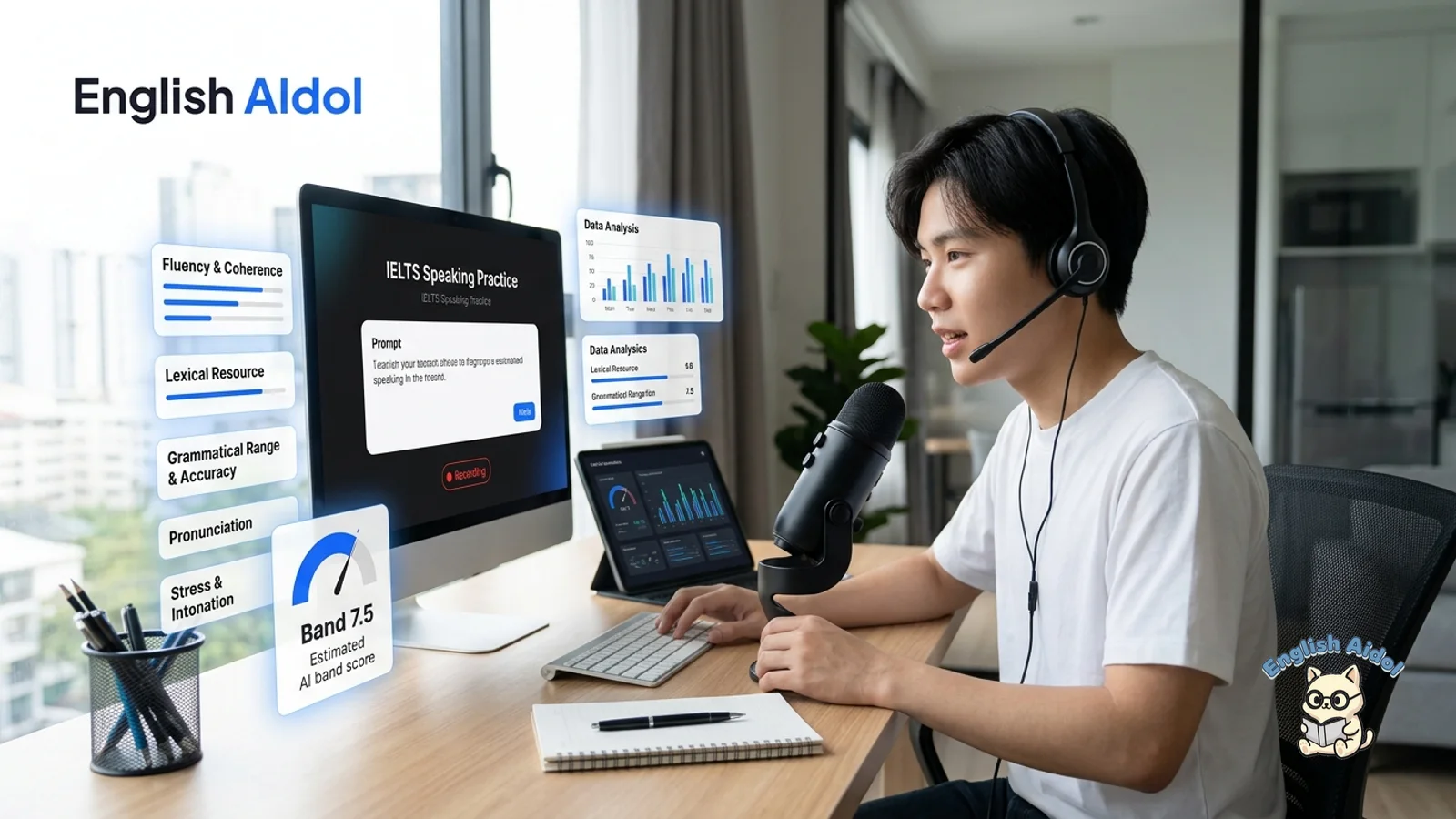
Best Way to Practise IELTS Speaking with AI
Record short answers first, then build longer responses. For Part 1, aim for two or three sentences. For Part 2, practise a clear beginning, two developed details, and a natural ending. For Part 3, focus on explaining reasons and examples instead of giving personal stories only.
Use the feedback to choose one target per recording: reduce pauses, improve pronunciation of a repeated sound, add topic vocabulary, or fix one grammar pattern. Re-recording the same answer once is usually more useful than answering five new questions badly.
Frequently Asked Questions
How does AI IELTS Speaking practice work?
You speak naturally into your microphone and record a response to an IELTS Speaking question. English AIdol's AI transcribes your speech and evaluates four criteria — fluency and coherence, lexical resource, grammatical range and accuracy, and pronunciation — then gives you a band score estimate and specific improvement tips.
Is AI feedback as accurate as a real IELTS examiner?
No AI practice score is an official examiner result. It can provide quick, repeatable feedback, but it may miss nuance or make errors; use qualified human review when you need a dependable readiness check.
What IELTS Speaking topics does the AI cover?
Practice includes Part 1 personal topics, Part 2 cue cards, and Part 3 discussion themes. No independent topic bank can guarantee the questions that will appear on a live test.
Is English AIdol AI Speaking practice free?
Some practice may be available without payment, while limits and advanced features depend on the current plan. Check the practice or pricing screen for live details.