A student-friendly TOEFL 2026 routine using real English AIdol screens for Speaking, Writing, Reading, Listening, and feedback review.
FocusQuick answer
Includes2026 update
Best forPractical checklist
Next stepRelated practice
Scan the direct answer first.
Check examples or score rules.
Open the related practice page.
TOEFL prep in 2026 can feel confusing because there is always another update, another app, another “must-use” template. My advice is more boring, but it works better: build a small routine that makes you answer, receive feedback, and immediately repair one thing.
Official ETS TOEFL materials still frame the test around academic English skills such as Reading, Listening, Speaking, and Writing. For self-study, that means your routine should not only collect practice questions. It should teach you how to notice what went wrong.
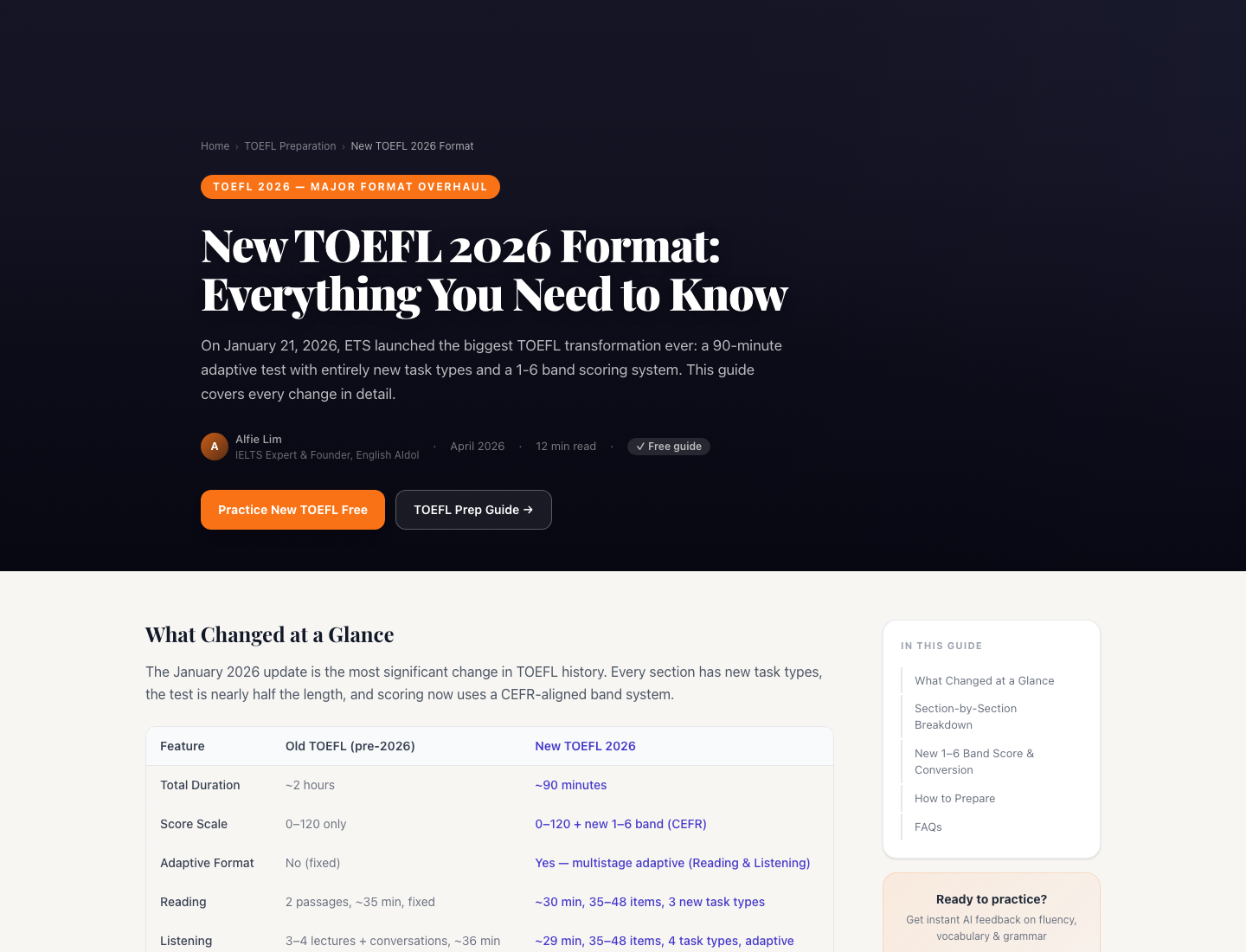
Use a TOEFL 2026 page as a starting map, then narrow the session to one task.
1. Do not study all four TOEFL skills in one sitting
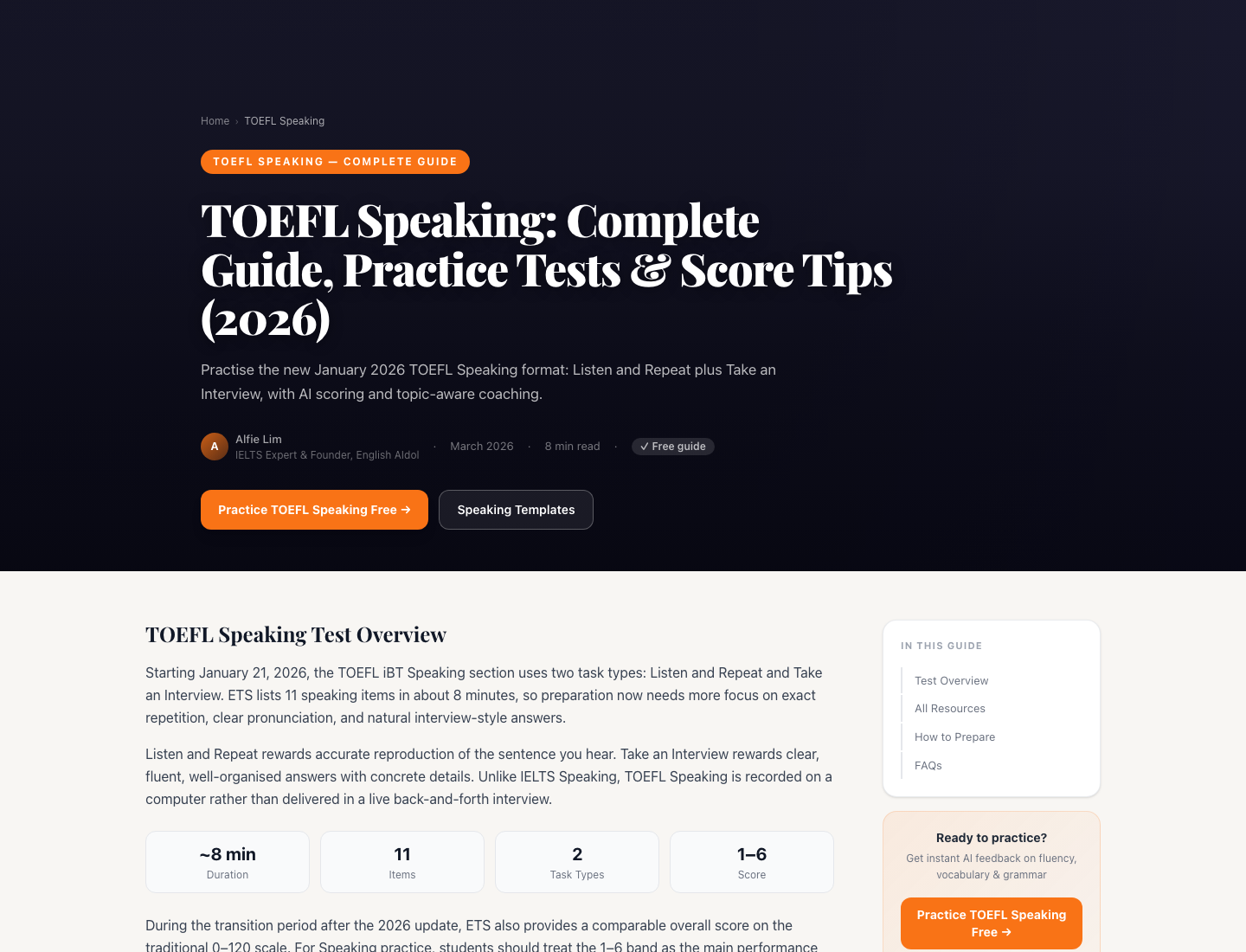
Trying to touch Reading, Listening, Speaking, and Writing every day sounds disciplined, but it often becomes shallow. If you have 30 minutes, choose one output skill first. Speaking is a good choice because the feedback quickly reveals fluency, structure, grammar, and vocabulary habits.
A hub view helps you choose a task without getting lost in general TOEFL advice.
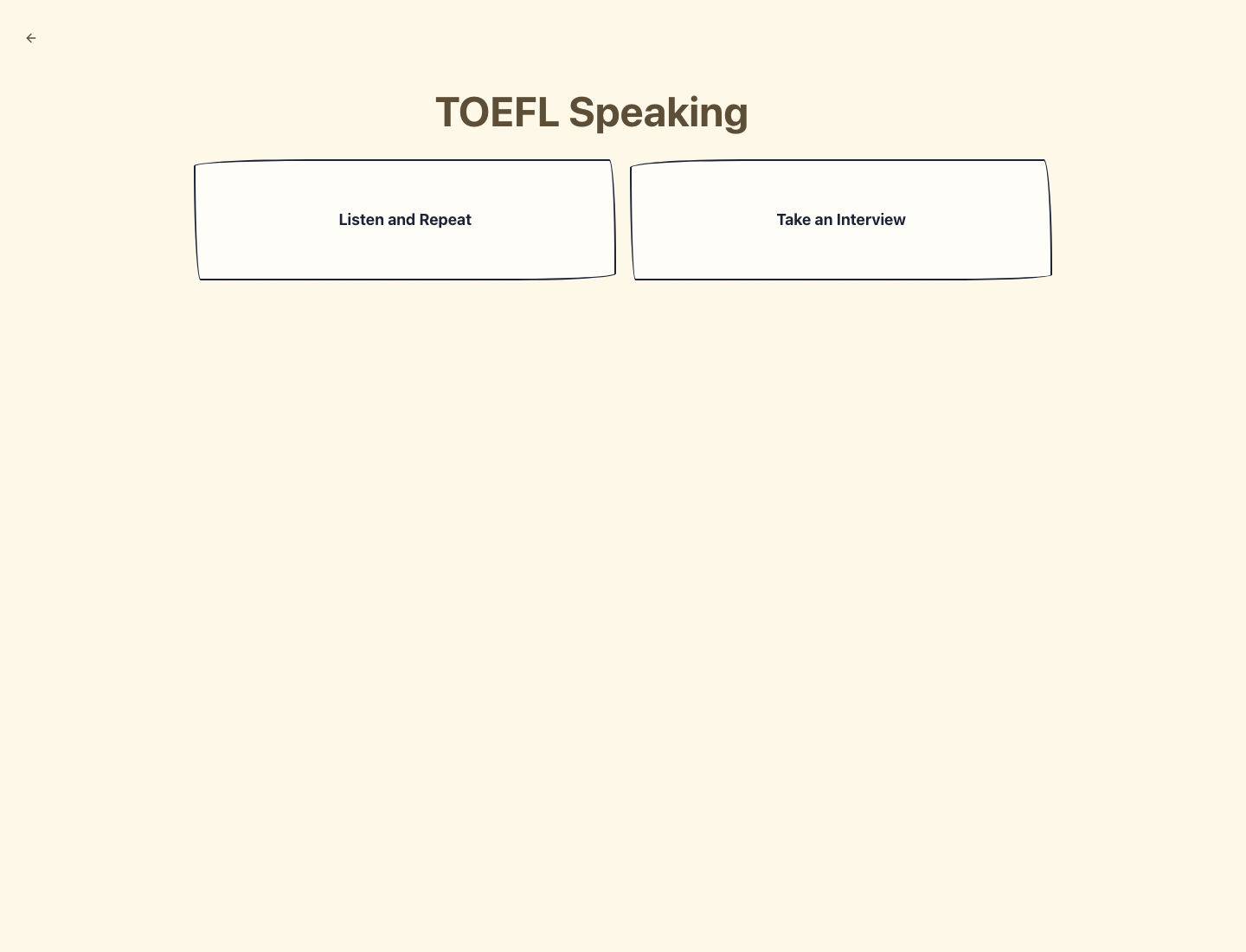
A practical speaking session is short: read the prompt, prepare two keywords, answer once, and then stop. The stopping part is important. If you record five answers without reviewing any of them, you have practiced repeating your current habits.
The practice screen should push you into a real answer, not only more theory.
2. Feedback should create the next answer
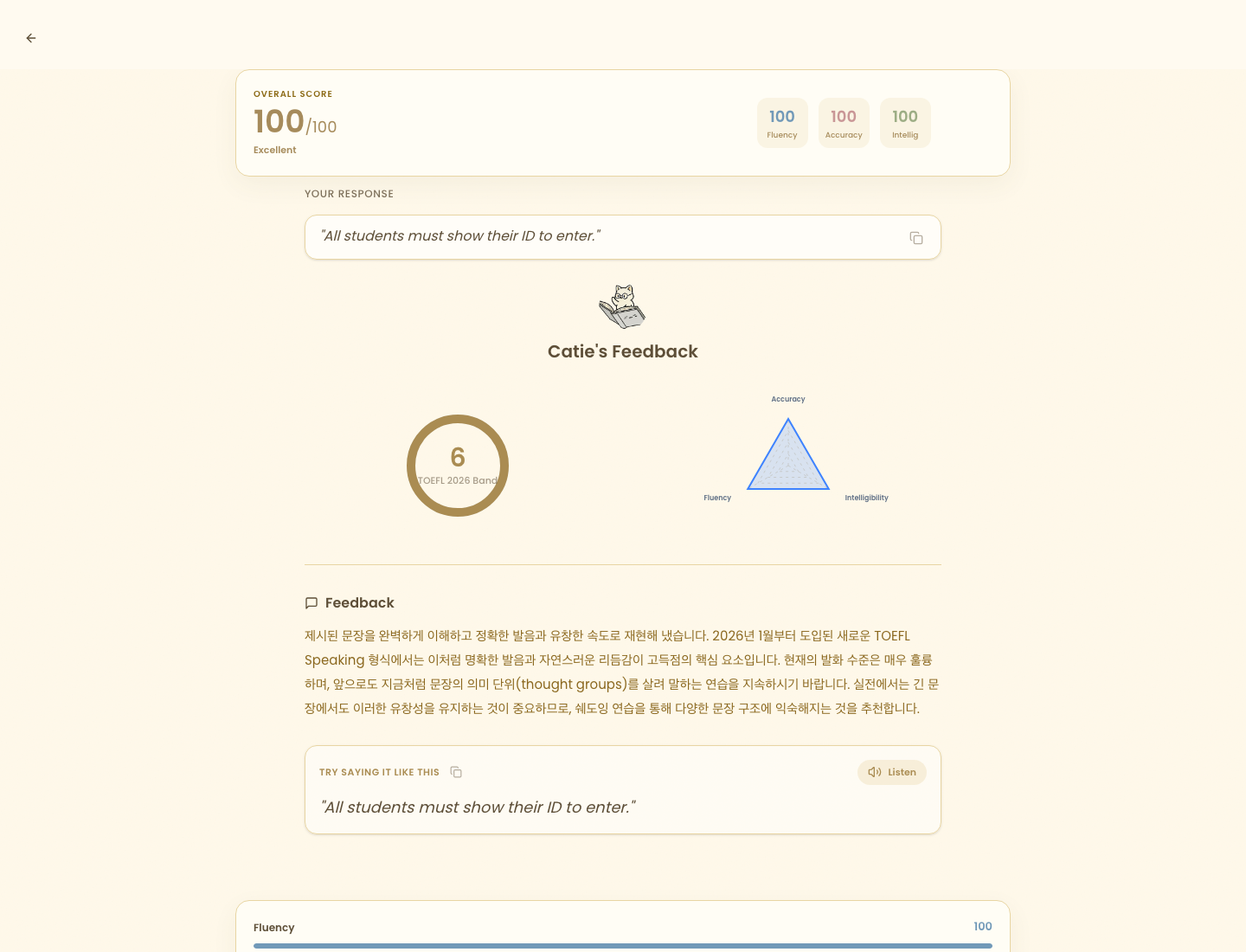
After a TOEFL Speaking response, do not ask only “what score did I get?” Ask “what would make the next version clearer?” If the answer jumped between ideas, fix the structure. If the support was weak, add one concrete example. If the grammar was messy, choose one sentence and rewrite it cleanly.
Feedback turns a recording into study material when you decide one next action.
3. Use Writing as the repair room
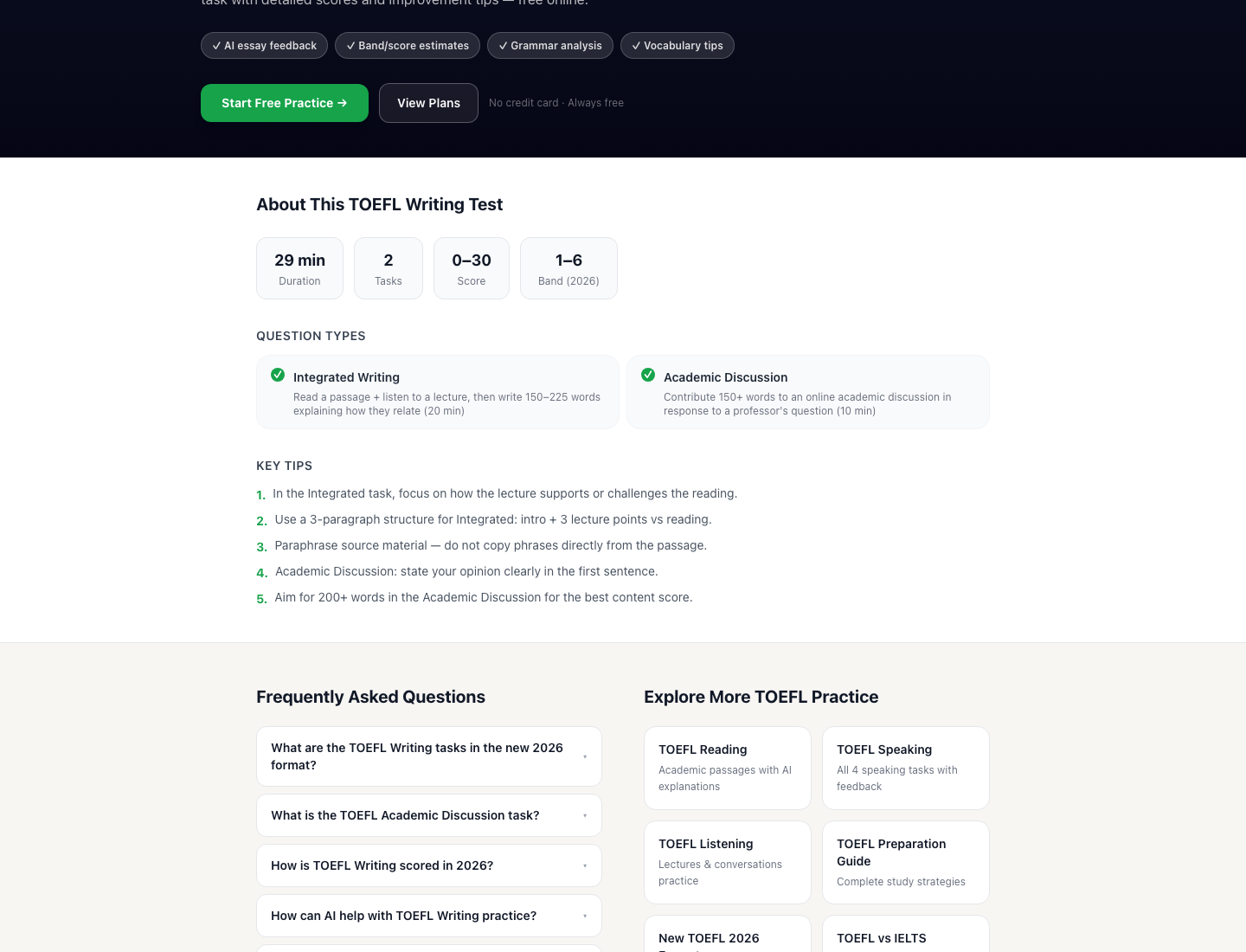
Writing is where you can slow down the same organization problem. If your speaking answer had a weak reason, write a short academic discussion response with one claim, one reason, and one example. You do not need a full essay every day. You need a cleaner habit than yesterday.
A small Writing task is enough when the goal is to repair one repeated weakness.
4. Reading and Listening should support accuracy
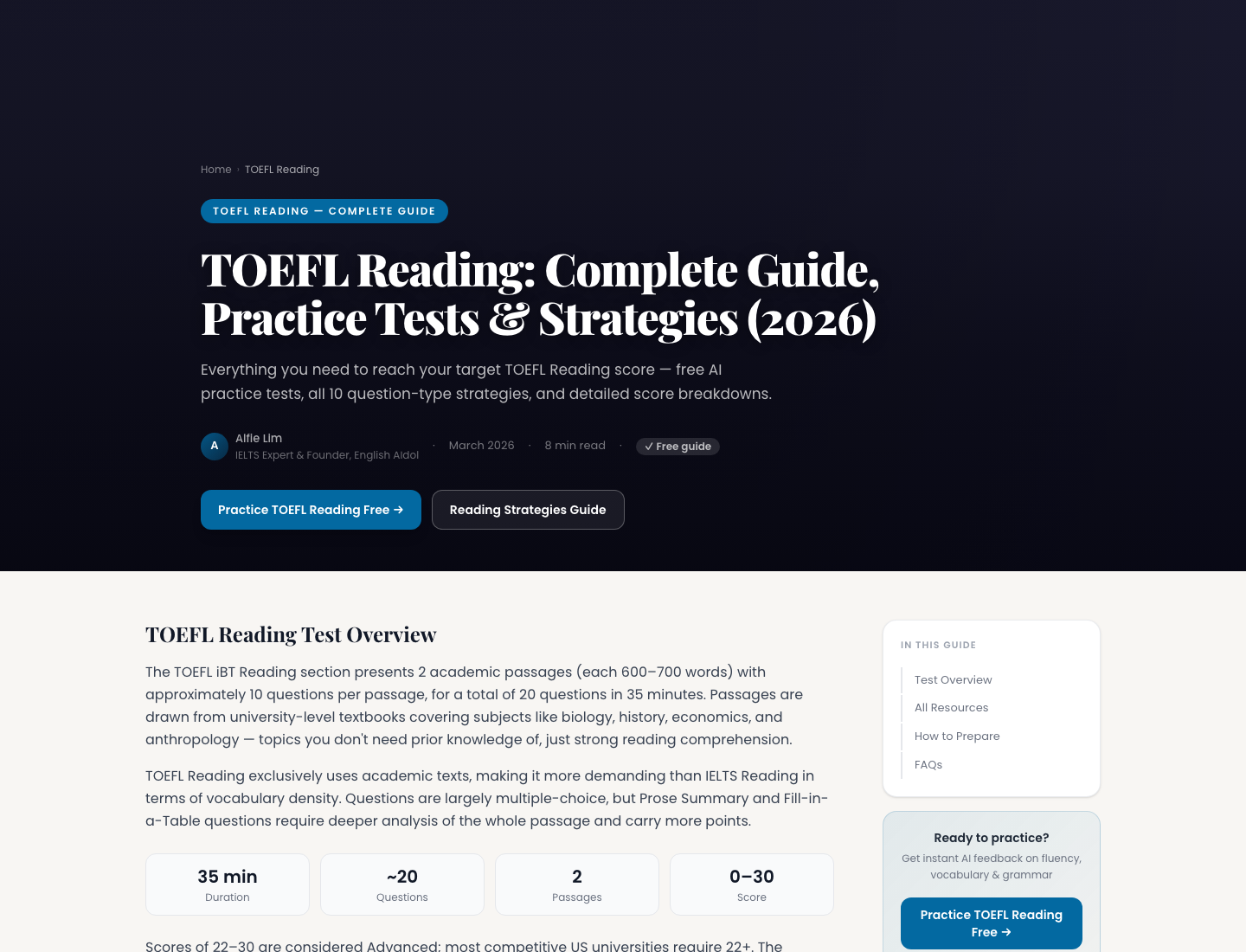
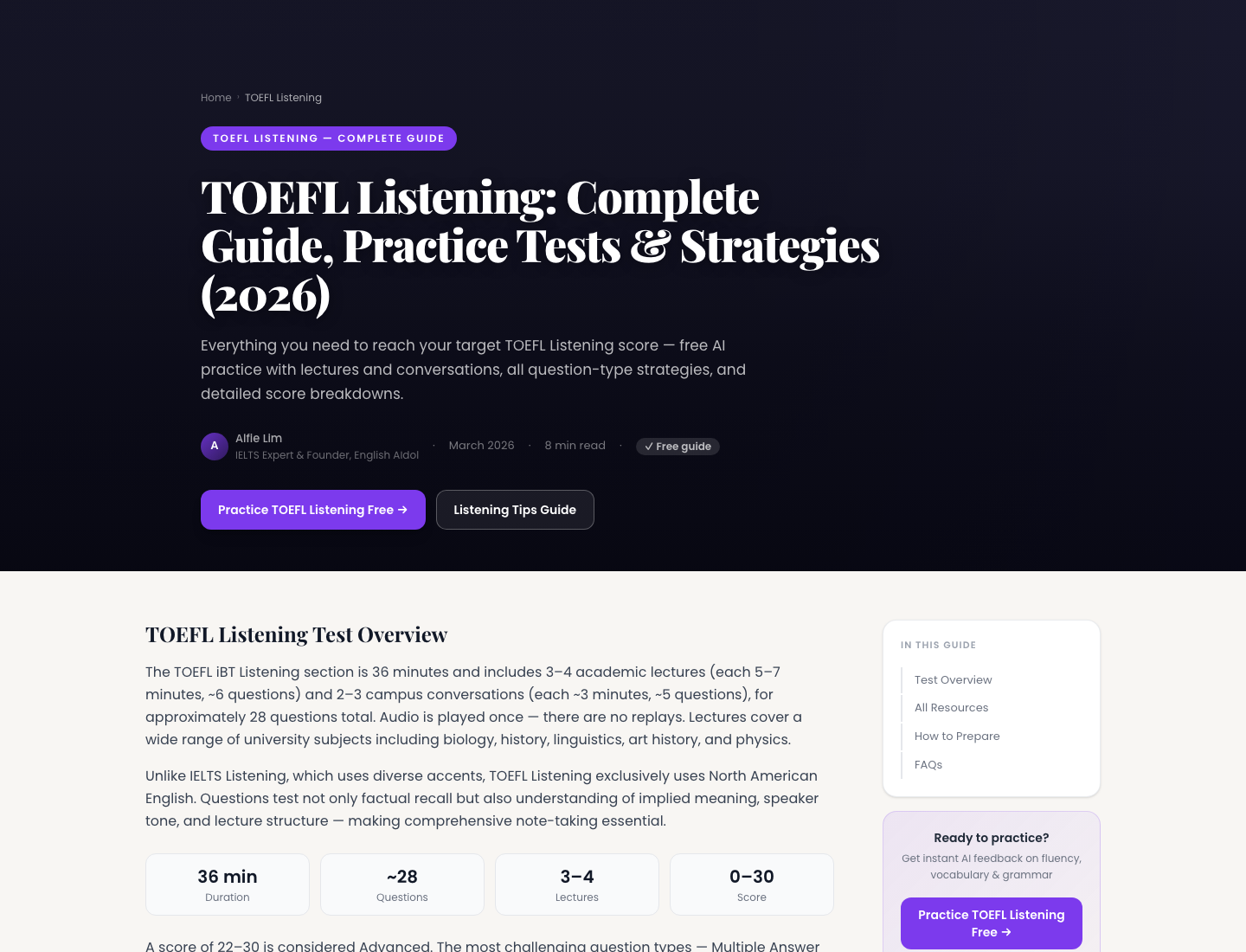
Reading and Listening are not only score sections. They train evidence. In Reading, review where the passage supports the correct answer. In Listening, review which phrase changed the meaning. This is how you stop relying on memory or “feeling” during multiple-choice questions.
For Reading, choose one passage and review evidence instead of rushing through a full set.Listening review should focus on the phrase that proves the answer.
The routine
5 minutes: choose one TOEFL Speaking or Writing task.
8 minutes: answer once and read the feedback.
7 minutes: repair one sentence, reason, or example.
5 minutes: review one Reading or Listening evidence point.
This article is written for search quality and generative-engine usefulness, but it is not built as keyword stuffing. The structure is intentionally evidence-led: real product screenshots, a clear routine, official test-format references, FAQ answers, and internal links to the exact English AIdol practice pages.
The IELTS version is aligned to the four official IELTS skill areas: Listening, Reading, Writing, and Speaking. The TOEFL version is aligned to ETS TOEFL iBT skill areas and 2026 search intent. Last reviewed: 24 May 2026. Screenshot evidence was captured from the current English AIdol production experience on the same date.