IELTS Speaking Part 1: Technology — Questions & Band 7/8/9 Answers
Related guides:
IELTS Speaking Part 1 Technology Questions
Common IELTS Speaking Part 1 Technology Questions
- Do you often use technology in your daily life?
- What kind of technology do you use most often?
- What technology do you think is the most useful?
- Do you prefer using technology or traditional methods for tasks?
- How has technology changed the way you communicate with others?
- What technology do you think will be important in the future?
- Do you think technology has made life easier or more complicated?
- How do you keep up with new technology?
IELTS Speaking Part 1 Technology Sample Answers
Band 6.0 Answer
Examiner: Do you often use technology in your daily life?
Candidate: Yes, I use technology a lot. I have a smartphone and I use it for many things like messaging, taking photos, and browsing the internet. I also use a computer for work and studying. Technology is very important in my life.
Scoring Breakdown:
- TR (Task Response): 5.0 - Provides a basic response but lacks detail and specific examples.
- CC (Coherence and Cohesion): 5.5 - Ideas are connected but with some repetition and lack of progression.
- LR (Lexical Resource): 5.5 - Uses some appropriate vocabulary but with limited range and some errors.
- GRA (Grammatical Range and Accuracy): 5.5 - Uses simple sentence structures with some errors in grammar and punctuation.
Band 7.0 Answer
Examiner: What kind of technology do you use most often?
Candidate: I frequently use my smartphone for various tasks. It's essential for communication, as I use messaging apps to stay in touch with friends and family. Additionally, I rely on it for navigation when I'm traveling, and I use various apps for entertainment, such as streaming services and games. It's become an indispensable tool in my daily life.
Scoring Breakdown:
- TR (Task Response): 7.0 - Provides a relevant and detailed response with specific examples.
- CC (Coherence and Cohesion): 7.0 - Ideas are logically organized with clear progression and some use of cohesive devices.
- LR (Lexical Resource): 7.0 - Uses a mix of appropriate vocabulary with some less common words and some errors.
- GRA (Grammatical Range and Accuracy): 7.0 - Uses a mix of simple and complex sentence structures with some errors in grammar and punctuation.
Band 8.0 Answer
Examiner: What technology do you think is the most useful?
Candidate: In my opinion, the internet is the most useful technology. It has revolutionized the way we access information, communicate, and conduct business. With just a few clicks, I can find answers to almost any question, connect with people worldwide, and even attend virtual meetings. The internet has made knowledge and opportunities more accessible than ever before, bridging gaps and fostering global connectivity.
Scoring Breakdown:
- TR (Task Response): 8.0 - Provides a detailed and relevant response with specific examples and clear position.
- CC (Coherence and Cohesion): 8.0 - Ideas are logically organized with clear progression and effective use of cohesive devices.
- LR (Lexical Resource): 8.0 - Uses a wide range of appropriate vocabulary with some less common words and few errors.
- GRA (Grammatical Range and Accuracy): 8.0 - Uses a mix of simple and complex sentence structures with some errors in grammar and punctuation.
Band 9.0 Answer
Examiner: How has technology changed the way you communicate with others?
Candidate: Technology has profoundly transformed my communication habits. Social media platforms and messaging apps have made it effortless to stay connected with friends and family, regardless of geographical boundaries. Video calls, for instance, allow me to have face-to-face conversations with loved ones who live abroad, making distance feel negligible. Moreover, professional communication has been streamlined through email and collaborative tools, enhancing productivity and efficiency. However, while technology has brought us closer, it has also introduced challenges, such as the need to manage digital etiquette and maintain meaningful connections amidst the noise of constant notifications.
Scoring Breakdown:
- TR (Task Response): 9.0 - Provides a detailed and relevant response with specific examples, clear position, and balanced discussion.
- CC (Coherence and Cohesion): 9.0 - Ideas are logically organized with clear progression and effective use of cohesive devices.
- LR (Lexical Resource): 9.0 - Uses a wide range of appropriate vocabulary with less common words and rare errors.
- GRA (Grammatical Range and Accuracy): 9.0 - Uses a mix of simple and complex sentence structures with rare errors in grammar and punctuation.
Vocabulary Highlights
- Indispensable (adj.) - Absolutely necessary. Example: My smartphone has become an indispensable tool in my daily life.
- Revolutionized (verb) - Dramatically changed. Example: The internet has revolutionized the way we access information.
- Bridging gaps (phrase) - Connecting or reducing differences. Example: The internet bridges gaps and fosters global connectivity.
- Streamlined (verb) - Made more efficient. Example: Email has streamlined professional communication.
- Geographical boundaries (noun phrase) - Physical limits or borders. Example: Social media helps us stay connected regardless of geographical boundaries.
- Face-to-face conversations (noun phrase) - Direct, in-person talks. Example: Video calls allow face-to-face conversations with loved ones abroad.
- Digital etiquette (noun phrase) - Proper behavior online. Example: We need to manage digital etiquette in our communications.
- Constant notifications (noun phrase) - Continuous alerts. Example: Constant notifications can disrupt meaningful connections.
- Productivity (noun) - The effectiveness of productive effort. Example: Collaborative tools enhance productivity and efficiency.
- Effortless (adj.) - Requiring little or no effort. Example: Messaging apps make it effortless to stay connected.
- Global connectivity (noun phrase) - Worldwide communication links. Example: The internet fosters global connectivity.
- Accessible (adj.) - Easy to obtain or use. Example: The internet makes knowledge and opportunities more accessible.
- Conduct business (phrase) - Engage in commercial activities. Example: The internet has changed the way we conduct business.
- Virtual meetings (noun phrase) - Online gatherings. Example: I can attend virtual meetings with just a few clicks.
- Meaningful connections (noun phrase) - Significant relationships. Example: Technology helps us maintain meaningful connections.
Common Mistakes to Avoid
- Lack of Specific Examples: Avoid vague responses. Use specific examples to illustrate your points.
- Repetition: Vary your language and avoid repeating the same words or phrases.
- Grammatical Errors: Pay attention to grammar and punctuation to ensure clarity and accuracy.
- Overuse of Fillers: Avoid using fillers like "um" and "uh" to sound more fluent.
- Inadequate Vocabulary: Use a range of vocabulary to demonstrate your language proficiency.
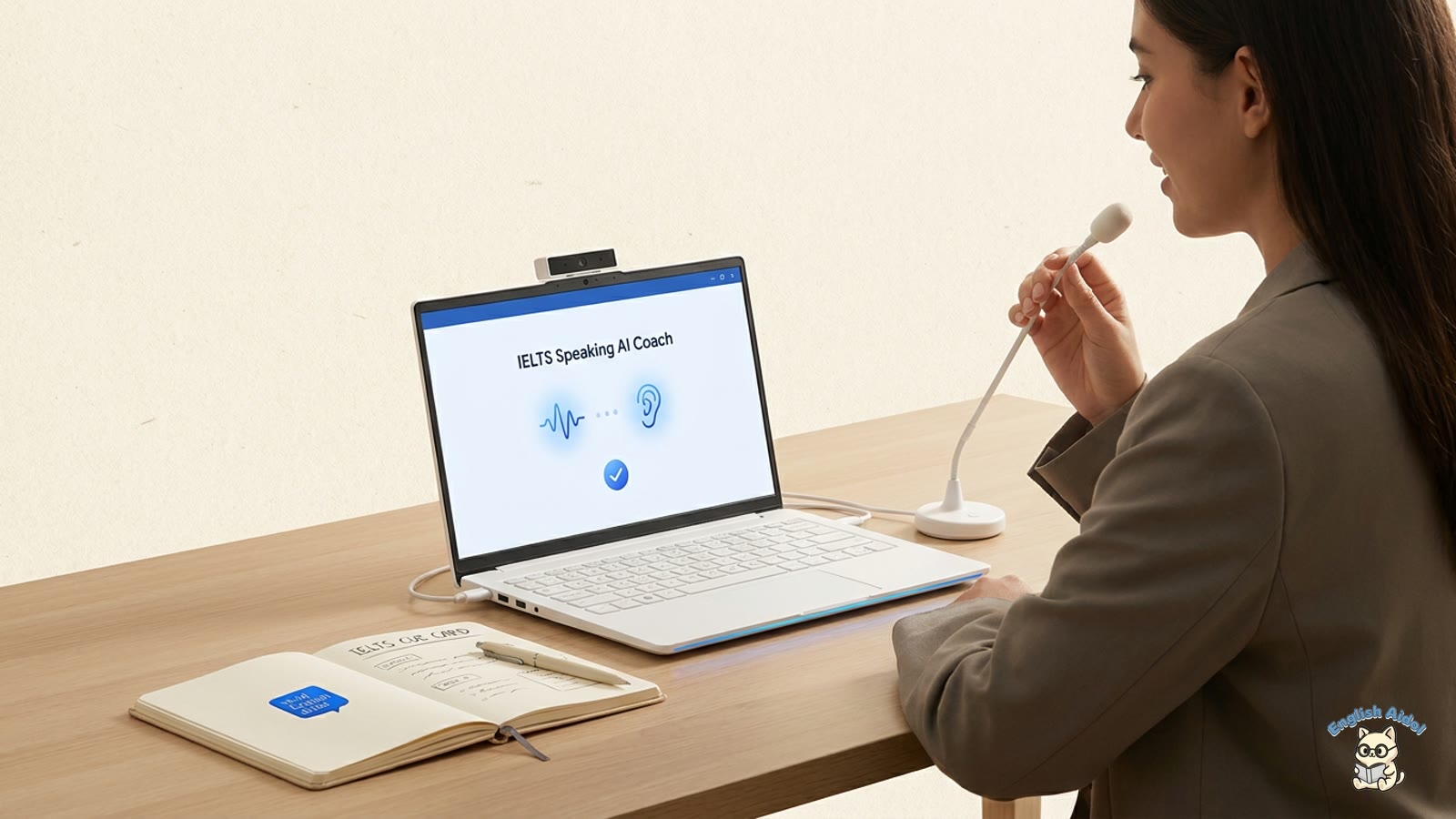
Get Your Own Response Scored by AI on English AIdol
Practice makes perfect. Get your own IELTS Speaking Part 1 responses scored by AI on English AIdol and receive personalized feedback to improve your score.