NEW TOEFL Reading Guide — Adaptive Test (2026)
Master the new TOEFL 2026 Reading adaptive section with expert strategies for student emails, announcements, and practical STEM texts. 90-minute test.
Master the new TOEFL 2026 Reading adaptive section with expert strategies for student emails, announcements, and practical STEM texts. 90-minute test.
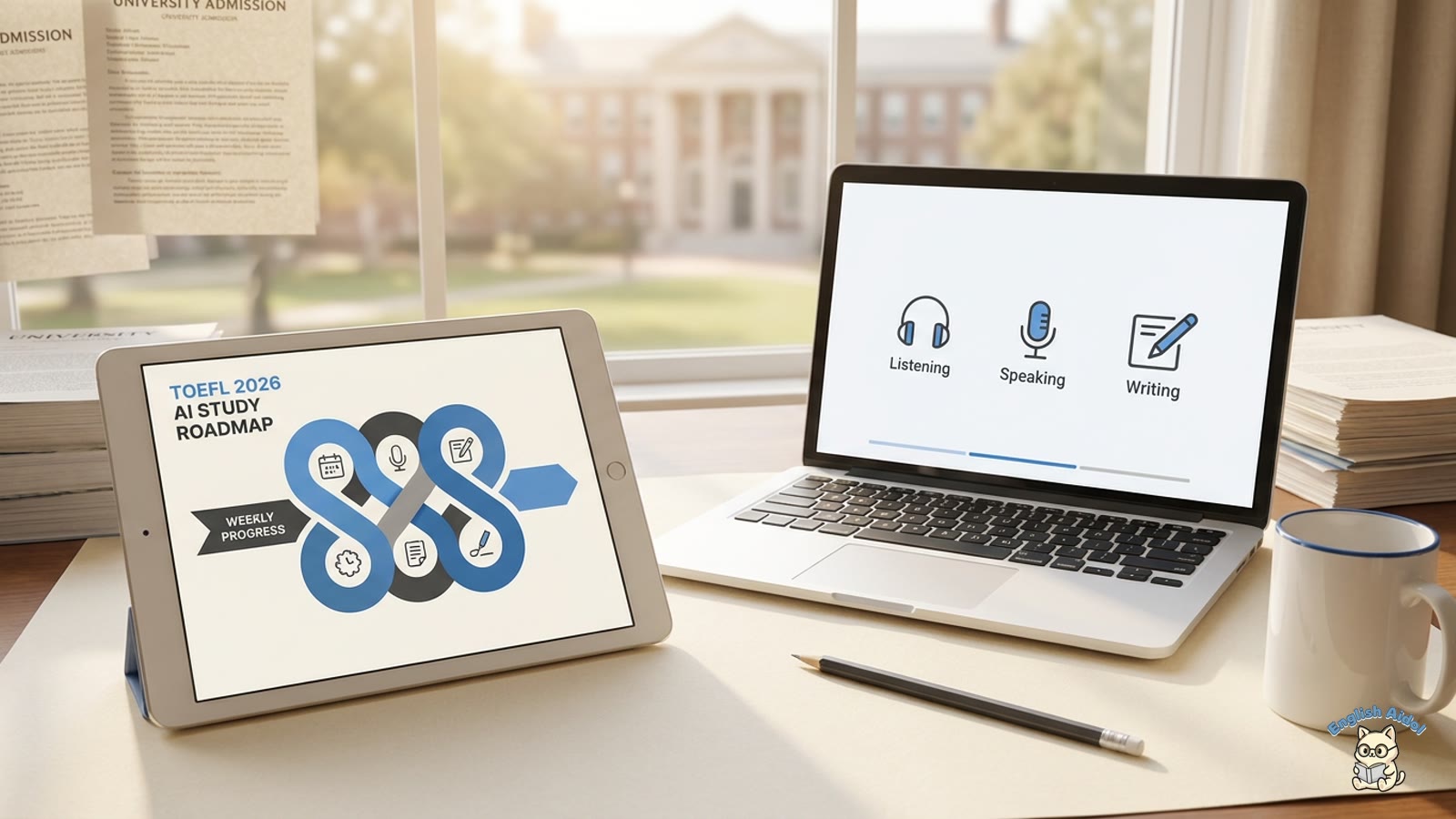
What this guide covers
Search answer
Master the new TOEFL 2026 Reading adaptive section with expert strategies for student emails, announcements, and practical STEM texts. 90-minute test.
Related guides:
This guide is for students preparing for the new TOEFL iBT format starting January 21, 2026. It's especially useful for those who want to understand the adaptive Reading section, which includes practical passage types like student emails, campus announcements, and STEM texts.
The new TOEFL Reading section is designed to assess your ability to understand and analyze academic texts. It's a crucial part of the TOEFL iBT test, which has been updated to better reflect real-world English usage. The test is now 90 minutes long and uses a multistage adaptive format.
Adaptive testing means the difficulty of the questions adjusts based on your performance. If you answer correctly, the next set of questions will be more challenging. If you answer incorrectly, the next set will be easier. This ensures a more accurate assessment of your reading skills.
The new TOEFL Reading section includes a variety of passage types, such as:
These passages are designed to reflect the types of texts you might encounter in an academic setting.
The new TOEFL Reading section includes a variety of question types, such as:
With the new 90-minute format, time management is crucial. Here are some strategies to help you manage your time effectively:
The new TOEFL Reading section uses a 1-6 CEFR-aligned scale, with legacy 0-120 dual-scoring during the transition. This means your score will be reported on both scales to ensure continuity.
The new TOEFL Reading section is a 90-minute, multistage adaptive test featuring practical passage types like student emails, campus announcements, and STEM texts. It uses a 1-6 CEFR scale with legacy 0-120 dual-scoring during the transition.
Adaptive testing means the difficulty of the questions adjusts based on your performance. If you answer correctly, the next set of questions will be more challenging. If you answer incorrectly, the next set will be easier.
The new TOEFL Reading section includes a variety of passage types, such as student emails, campus announcements, RA notices, bulletin boards, and practical STEM texts.
Practice with a timer, skip difficult questions, and pace yourself by allocating a specific amount of time for each passage and question.
The new TOEFL Reading section uses a 1-6 CEFR-aligned scale, with legacy 0-120 dual-scoring during the transition.
Avoid rushing through passages, ignoring instructions, and not reviewing answers.
Read regularly, use official materials, and take practice tests to simulate test conditions.
To further improve your TOEFL Reading skills, consider the following steps:
Value: 90-minute test Source: ETS 2026
Value: 5 new types Source: ETS 2026
Value: 1-6 CEFR scale Source: ETS 2026
[ ]