IELTS self-study review: a 30-minute routine when Speaking and Writing feel stuck
A practical IELTS advisor-style walkthrough using real English AIdol screens: Speaking topics, recorded feedback, Writing, Reading, and Listening result pages.
Start with one cue card or Part 2 topic instead of opening ten tabs.
Record and read the feedback
Use the score only as a location marker, then study the comments for fluency, grammar, vocabulary, and coherence.
Move one mistake into Writing
Turn repeated speaking weaknesses into a short Writing Task 2 paragraph or introduction drill.
Review Reading and Listening evidence
Check why an answer is correct, not only whether you got it right.
When students tell me IELTS Speaking is “stuck,” the real problem is usually not confidence. It is that their study routine has no feedback loop. They watch a few videos, save a list of phrases, answer one cue card in their head, and then move on before anyone has shown them what actually needs to change.
So this is not a brand-style product introduction. Think of it as the routine I would give a busy student who has 30 minutes, wants to study alone, and needs a clearer way to use AI feedback without turning the whole evening into exam prep.
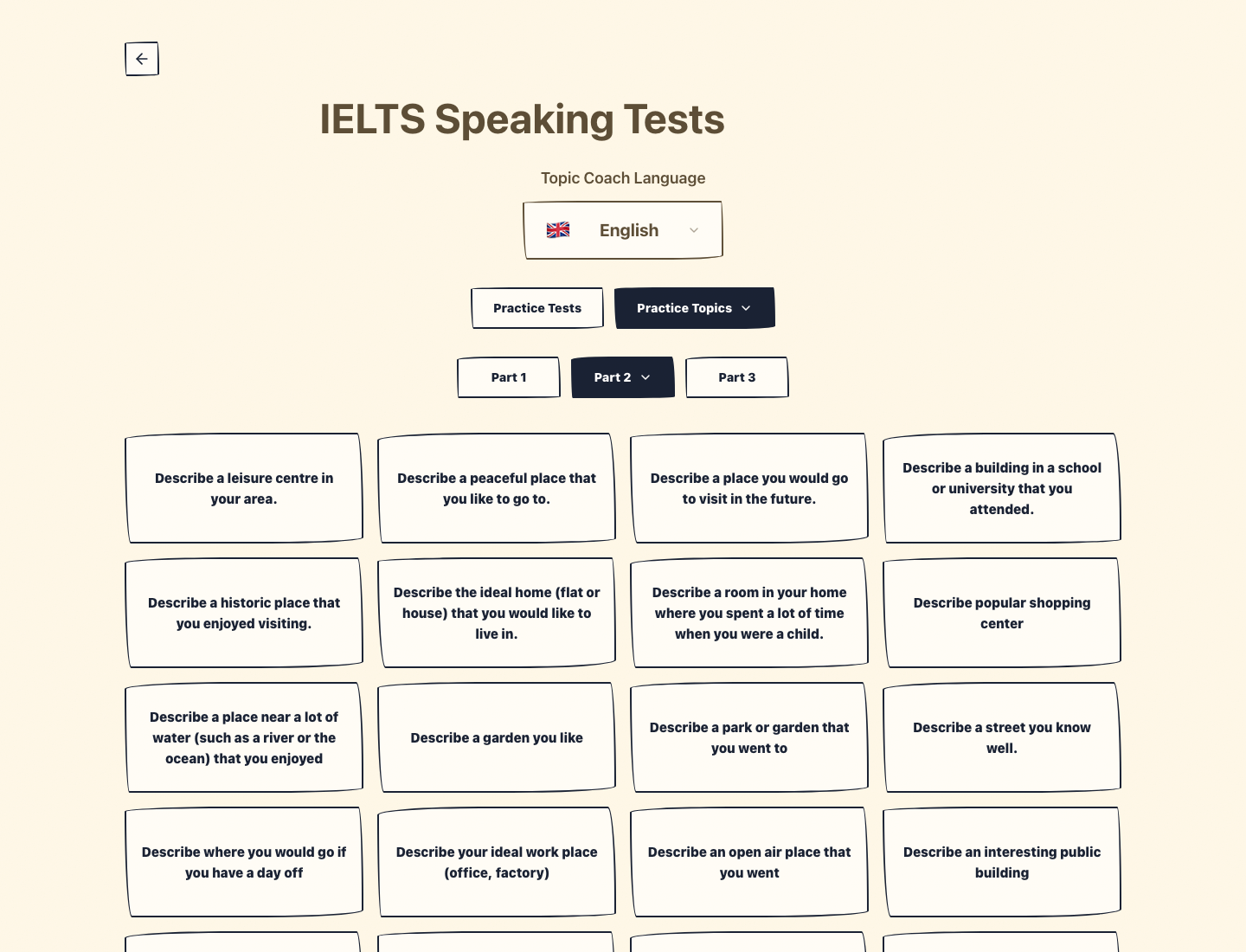
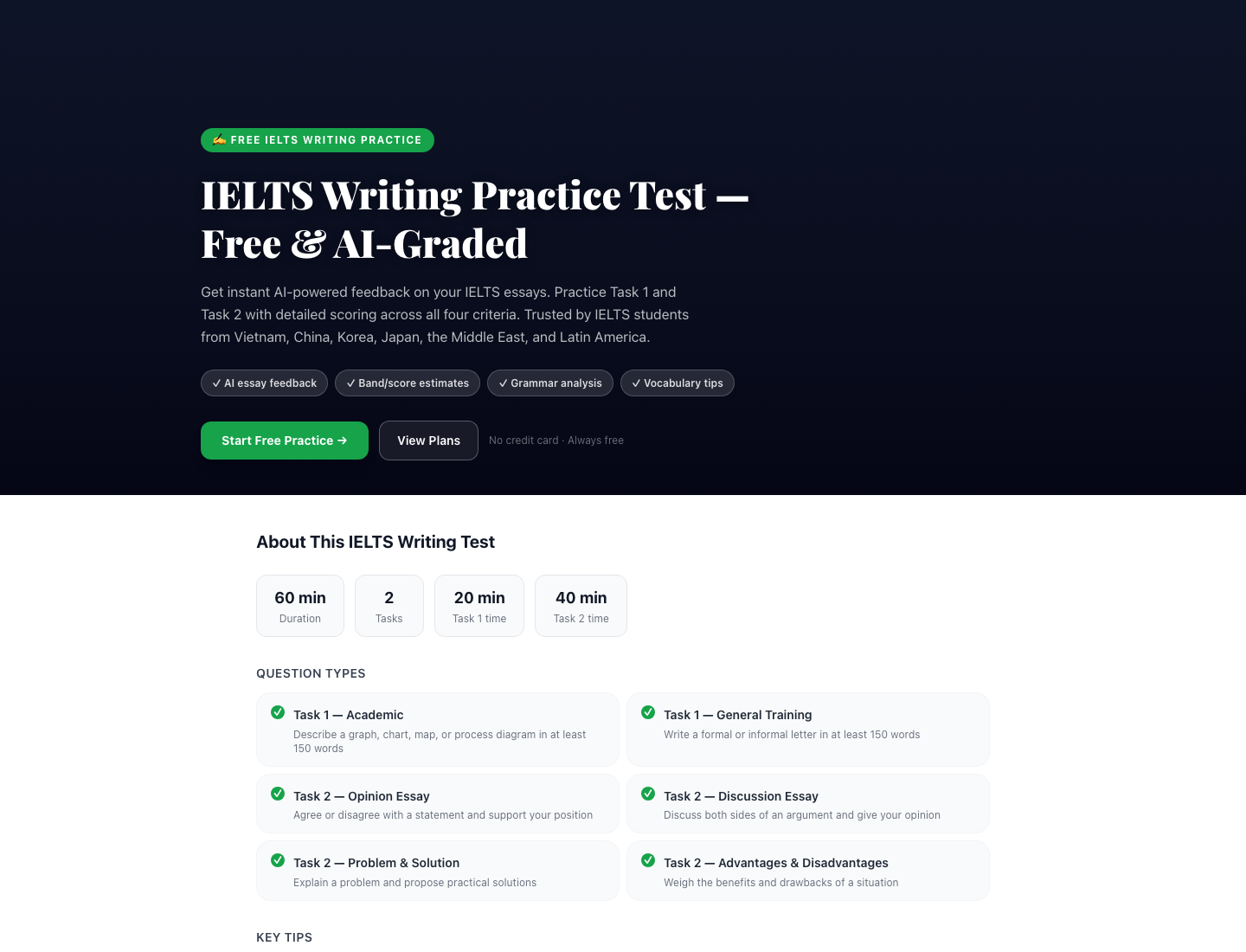
Start with a specific Speaking topic, not a vague promise to “practice speaking today.”
1. Pick one speaking topic and make the practice small
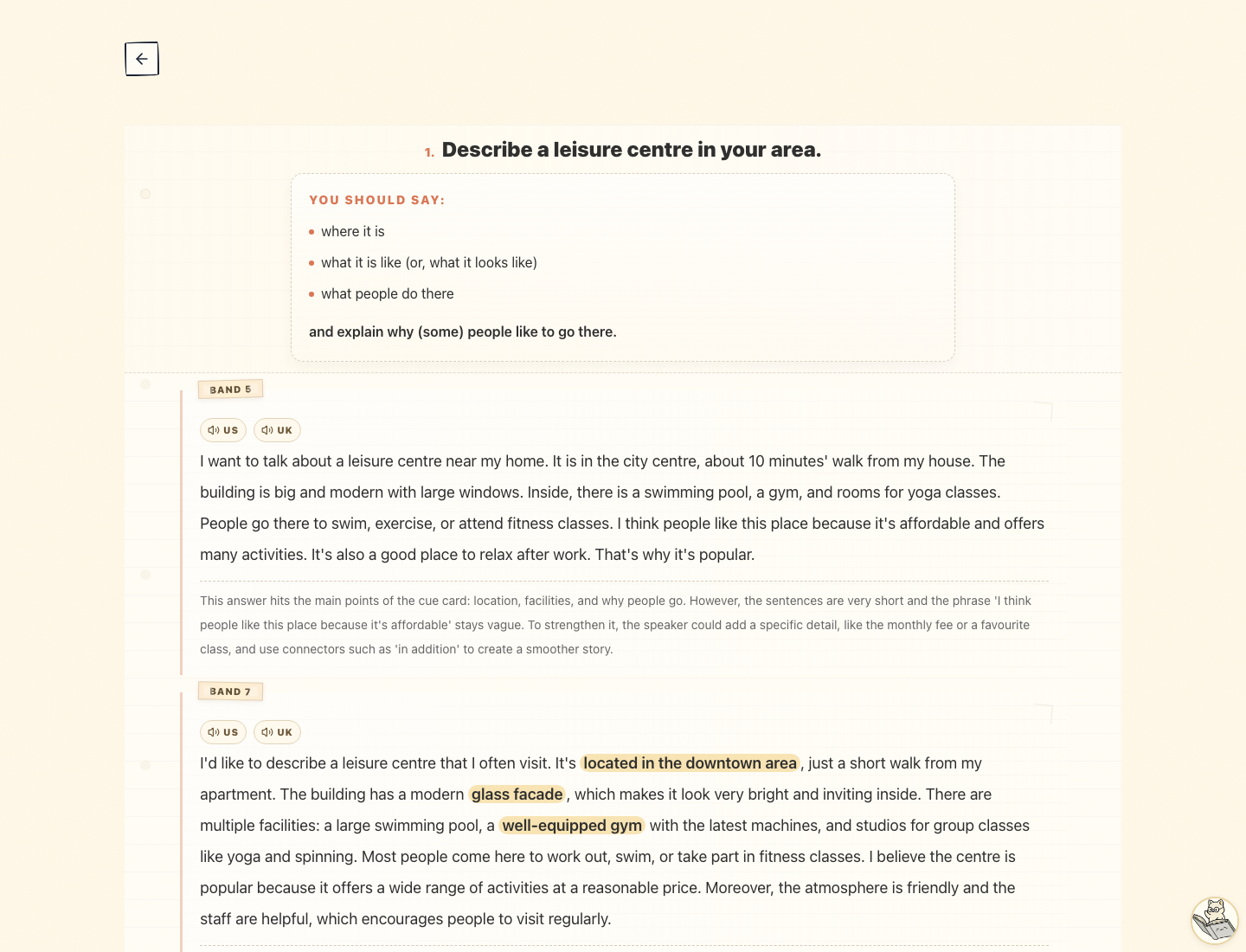
For IELTS Speaking Part 2, the goal is not to produce a perfect two-minute answer every time. A better first goal is to build a repeatable answer shape: opening sentence, two concrete details, one reason, and a natural closing line. If you can do that with one topic, you can transfer it to another topic tomorrow.
The screenshot above is useful because it turns “IELTS Speaking practice” into a visible list of choices. That matters. Students waste a surprising amount of energy deciding what to study, and by the time they choose, the session already feels heavy.
A cue-card style page helps you prepare the answer in parts instead of memorizing a full script.
2. Use the one-minute prep time like a structure test
In the one-minute preparation time, do not write full sentences. Write anchors. For example: who, where, what happened, why it mattered. If you write full sentences, you will usually read them in your head and sound less natural when speaking.
My preferred drill is simple: spend one minute planning, speak for 90 seconds, then listen only for one thing. Did the answer have a beginning, middle, and ending? If not, fix the structure before worrying about advanced vocabulary.
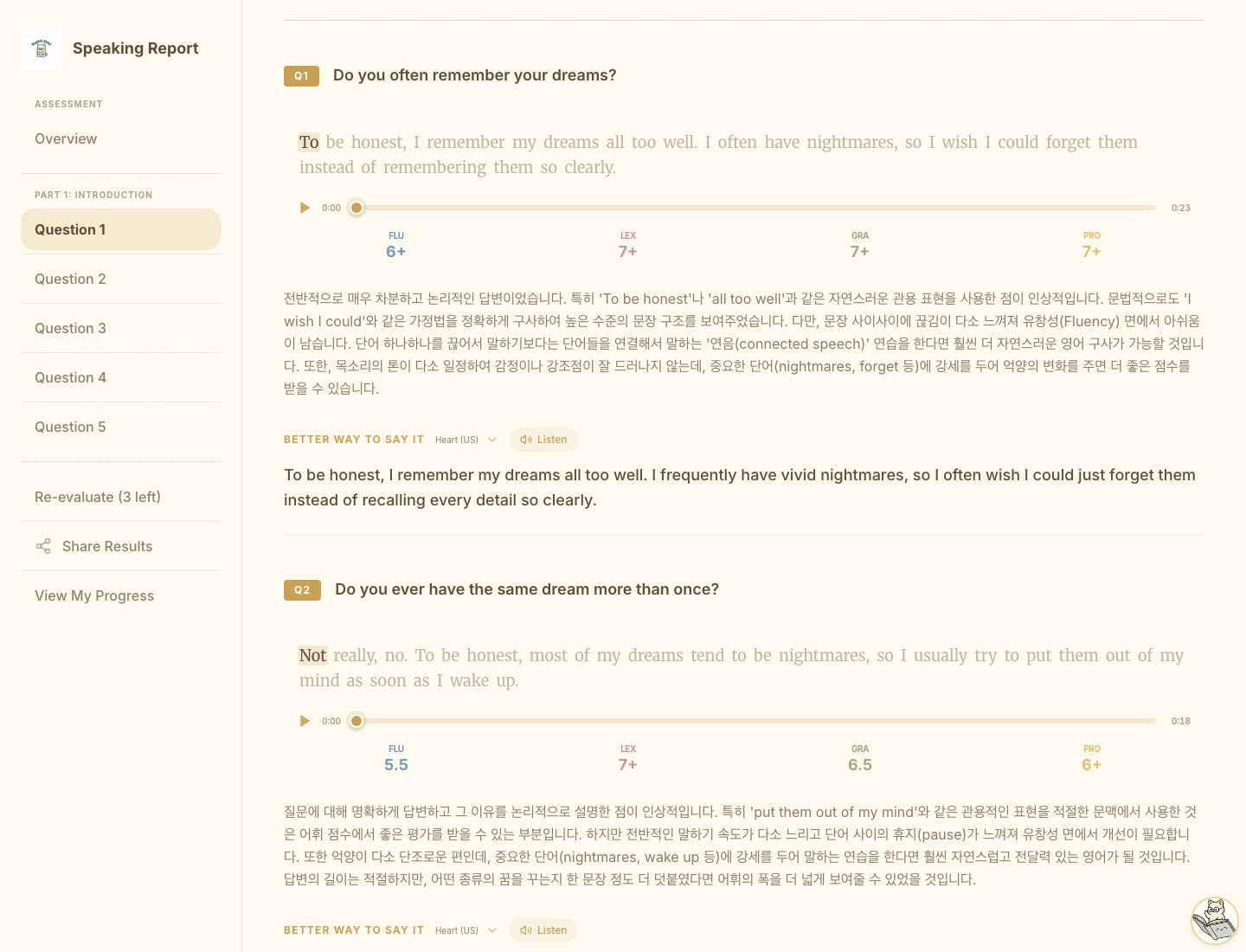
The score is useful, but the comments are where the actual study material starts.
3. Read feedback like an advisor, not like a judge
A common mistake is to look at the band score, feel happy or disappointed, and close the page. That wastes the best part of the session. Feedback should answer one practical question: what would I change in my next answer?
If the feedback mentions short development, the next answer needs a better example. If it mentions grammar, choose one sentence pattern to repair. If it mentions vocabulary, replace one repeated word with a more precise one. You are not trying to become a different speaker in one day. You are trying to make the next response 10% cleaner.
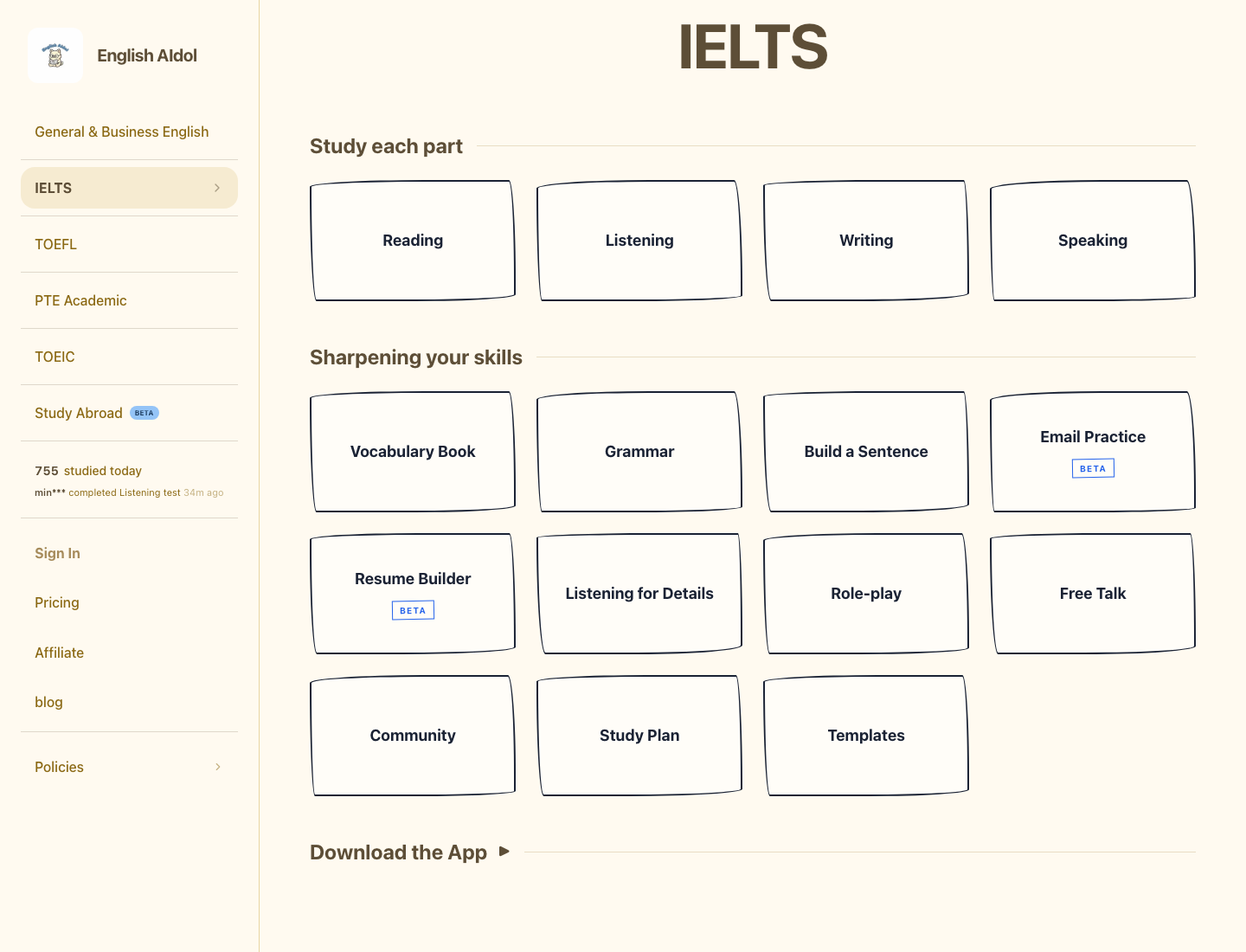
A good IELTS routine keeps Speaking, Writing, Reading, and Listening close enough that review does not scatter.
4. Do not isolate Speaking from the other skills
IELTS has four skills, and official IELTS materials separate Listening, Reading, Writing, and Speaking for a reason. But students often make the opposite mistake: they study each skill as if it has nothing to do with the others.
In reality, weak Speaking answers and weak Writing paragraphs often share the same root problem. The idea is too general. The reason is not explained. The example arrives too late. If you fix that habit in one skill, the benefit can appear in another.
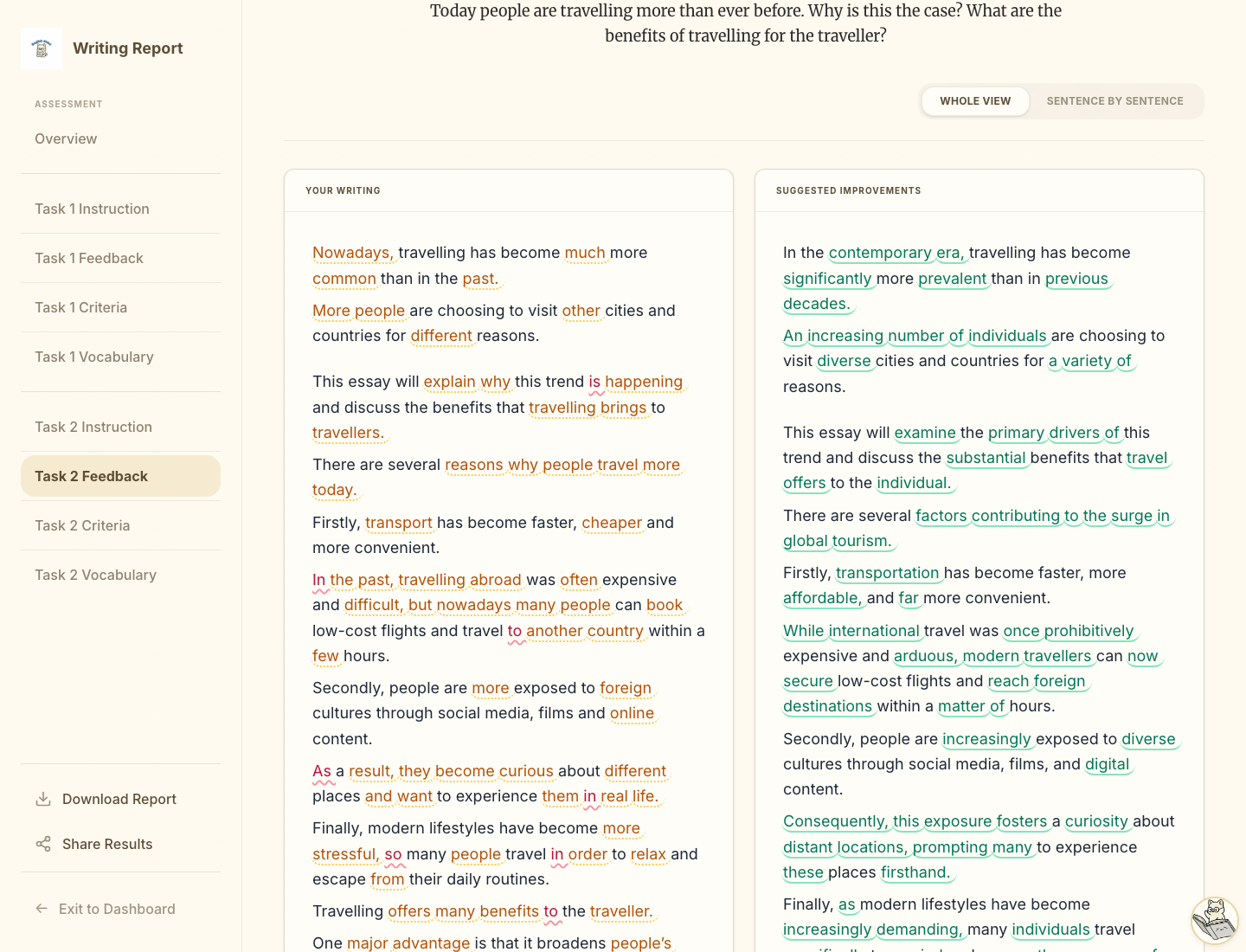
Writing practice is a good place to slow down the same logic you struggled to express in Speaking.
After Speaking, I like a very small Writing drill: write only an introduction or one body paragraph. Do not force a full essay when the real goal is to repair one habit. If your speaking answer lacked support, write a paragraph with a clear topic sentence, one reason, and one example.
Writing feedback is more useful when you treat each criterion as a separate repair point.
5. Review Reading and Listening as evidence training
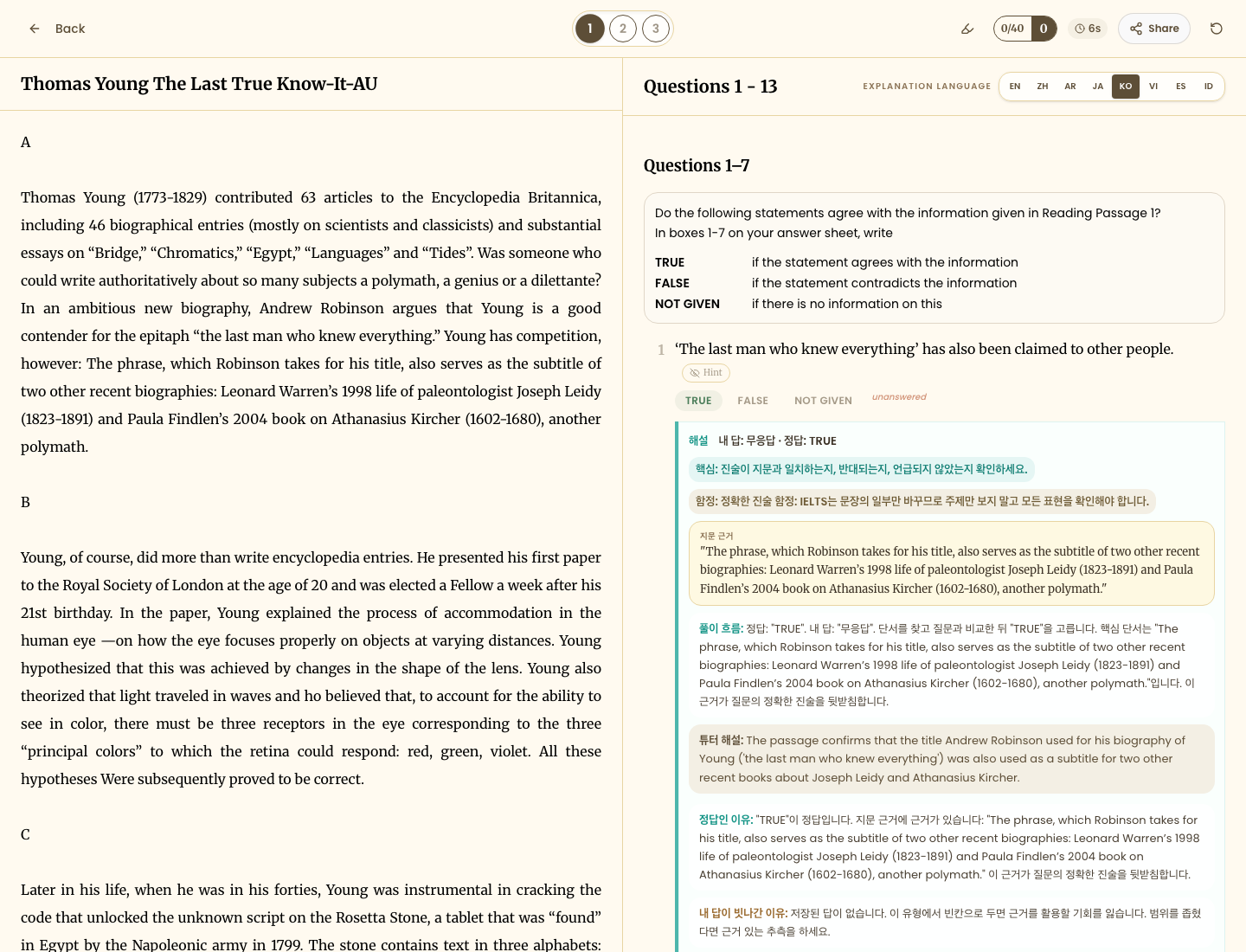
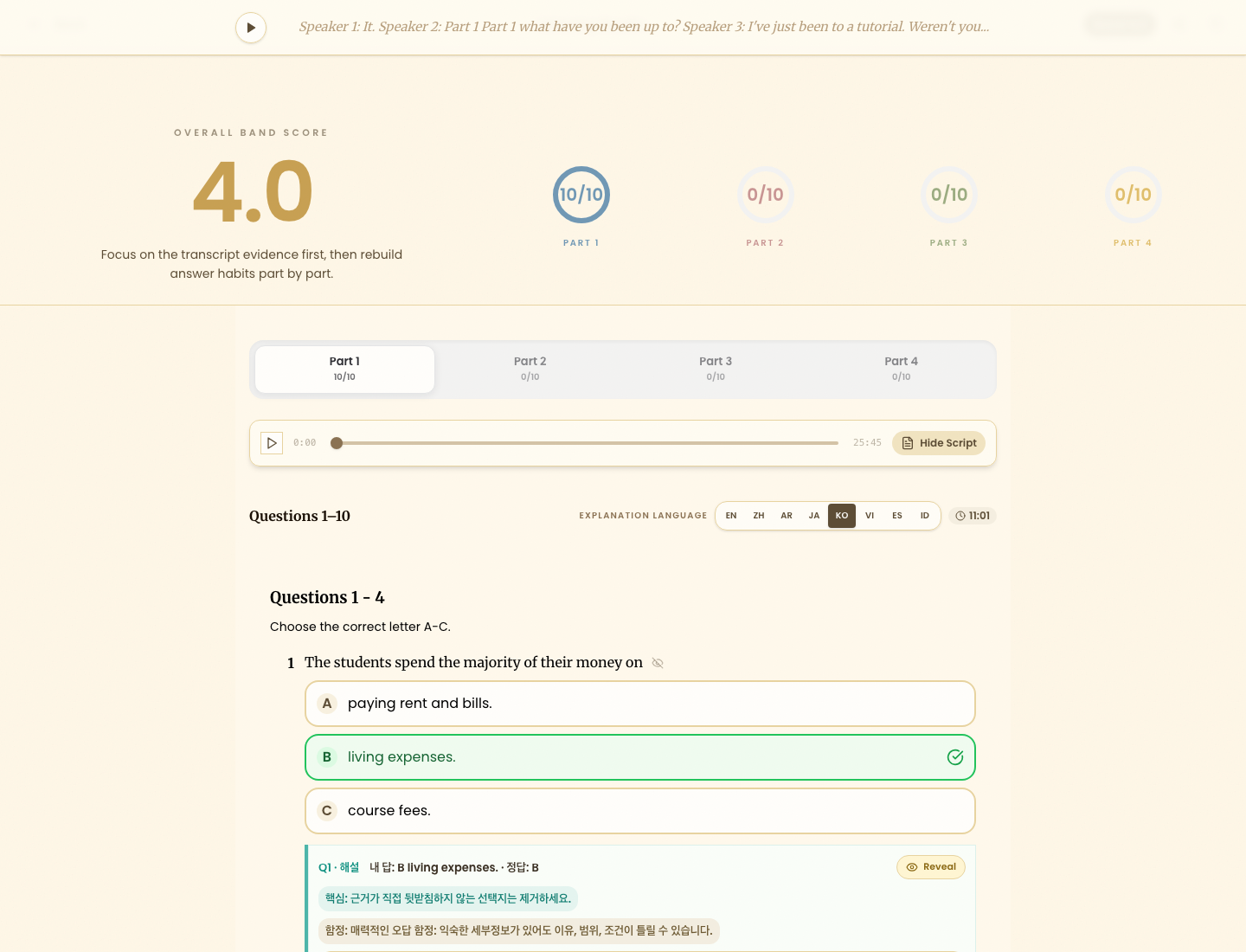
Reading and Listening should not be “answer checking only.” They train evidence habits. In Reading, ask where the answer is supported in the passage. In Listening, ask which word or phrase changed the meaning. This is especially important for self-study because nobody is sitting beside you to stop you from repeating the same guess.
For Reading, review one correct answer you guessed and one wrong answer you can explain.For Listening, focus on the phrase that made the answer clear, not just the final option.
The 30-minute routine I would actually use
5 minutes: choose one Speaking topic and plan with keywords only.
7 minutes: record one answer, then read the feedback.
8 minutes: rewrite one weak idea as a Writing paragraph.
5 minutes: review one Reading or Listening result.
5 minutes: write one sentence in a mistake log: “Next time I will...”
If you want to try this flow inside English AIdol, start from the IELTS practice portal, then move into IELTS Speaking practice or IELTS Writing practice. The important thing is not using every feature on day one. The important thing is building a routine you can repeat tomorrow.
Official format reference: IELTS describes the Academic test as covering Listening, Reading, Writing, and Speaking. Use the official test format page when checking timing and exam rules.
Reliability note
This article is written for search quality and generative-engine usefulness, but it is not built as keyword stuffing. The structure is intentionally evidence-led: real product screenshots, a clear routine, official test-format references, FAQ answers, and internal links to the exact English AIdol practice pages.
The IELTS version is aligned to the four official IELTS skill areas: Listening, Reading, Writing, and Speaking. The TOEFL version is aligned to ETS TOEFL iBT skill areas and 2026 search intent. Last reviewed: 24 May 2026. Screenshot evidence was captured from the current English AIdol production experience on the same date.
What is the best way to self-study IELTS Speaking when I feel stuck?
Start with one Part 2 topic, record one answer, read the feedback, and choose one repair for the next answer. This is more reliable than memorizing many sample answers without feedback.
Should I study IELTS Speaking and Writing together?
Yes, but keep it small. Many Speaking weaknesses, such as short support or weak examples, also appear in Writing Task 2. A short Writing paragraph after Speaking can repair the same problem more slowly.
How many screenshots does this review use?
This review uses seven current English AIdol production screenshots captured on 2026-05-24, including Speaking topics, Speaking feedback, Writing, Reading, and Listening result screens.