English guide
IELTS Speaking Part 2 Q1 2026 Bài Mẫu Chi Tiết Band 6.0–9.0
Bài mẫu IELTS Speaking Part 2 Q1 2026 chi tiết band 6.0–9.0, phân tích tiêu chí chấm thi, bộ từ vựng chuyên sâu và lộ trình luyện nói thực chiến bởi Alfie Lim.
English guide
Bài mẫu IELTS Speaking Part 2 Q1 2026 chi tiết band 6.0–9.0, phân tích tiêu chí chấm thi, bộ từ vựng chuyên sâu và lộ trình luyện nói thực chiến bởi Alfie Lim.
What this guide covers
Search answer
Bài mẫu IELTS Speaking Part 2 Q1 2026 chi tiết band 6.0–9.0, phân tích tiêu chí chấm thi, bộ từ vựng chuyên sâu và lộ trình luyện nói thực chiến bởi Alfie Lim.
Describe a time when you received unexpected help from a stranger while traveling or studying abroad. Bao gồm: Nơi xảy ra, người đó là ai, họ đã giúp bạn việc gì, và cảm xúc của bạn lúc đó.
---
I want to talk about a time I got lost in Hanoi last year. I was traveling alone to visit some museums. After walking for two hours, I couldn’t find my hotel because the streets looked exactly the same. My phone was dead, so I couldn’t use Google Maps. I felt very worried and tired. Then, a local man saw me looking confused. He came over and asked if I needed help. He spoke some English, so I told him my hotel name. He didn’t just point the way. He actually walked with me for fifteen minutes until we found the building. I was really grateful. He didn’t want any money, he just smiled and left. This experience showed me that Vietnamese people are very kind and helpful. If I hadn’t met him, I would have slept on the street. I still remember his face. It made my trip much better.
Phân tích Band 6.0:
---
I’d like to share an experience that really stuck with me. Two years ago, I was on a solo backpacking trip to Da Lat, and I completely lost my wallet near the night market. I was panicking because my passport and cash were inside. Suddenly, a café owner noticed I was distressed and rushed over. Instead of just calling the police, he immediately offered me a seat and a hot drink while he checked his CCTV. Within twenty minutes, a delivery driver found the wallet and dropped it off. The owner not only kept it safe but also helped me verify my identity. Honestly, I was overwhelmed by his kindness. It completely changed my perspective on traveling alone. I realized that you don’t need a safety net when locals are so trustworthy. That small gesture of solidarity turned a potential nightmare into one of my fondest travel memories.
Phân tích Band 7.0:
---
One incident that comes to mind happened during my exchange semester in Osaka. I was navigating the subway system when my IC card suddenly malfunctioned, leaving me stranded at a remote station with a rapidly dying phone. Just as I was mentally mapping out alternative routes, an elderly commuter approached me. He didn’t just offer verbal directions; he actually escorted me through three transfers, patiently explaining the fare zones and even topping up my card at the kiosk. What struck me most was his insistence on refusing any repayment, simply waving it off with a warm smile. That moment of unscripted generosity completely dismantled my preconceived notions about urban anonymity. It reinforced my belief that human connection often thrives in unpredictable scenarios. The encounter wasn’t merely about practical assistance; it served as a cultural masterclass in quiet hospitality, leaving me with a profound sense of gratitude that still resonates today.
Phân tích Band 8.0:
---
A defining moment from my academic travels unfolded in Singapore, where a sudden downpour trapped me outside the National Library with a stack of unprotected research materials. I was frantically trying to shield the documents when a passing postgraduate student noticed my predicament. Without hesitation, she shared her oversized umbrella, guided me to a covered corridor, and even lent me archival sleeves to preserve the damp pages. What truly elevated the interaction was how she seamlessly transitioned from a Good Samaritan into an informal mentor, sharing invaluable tips on navigating local archives. That spontaneous intervention didn’t just salvage my fieldwork; it fundamentally reshaped my understanding of academic communities. It highlighted how serendipitous encounters can bridge institutional gaps. I’ve since adopted her collaborative ethos in my own research practices. The experience remains etched in my memory not merely as a logistical rescue, but as a testament to the quiet, unspoken solidarity that fuels global scholarship.
Phân tích Band 9.0:
---
---
---
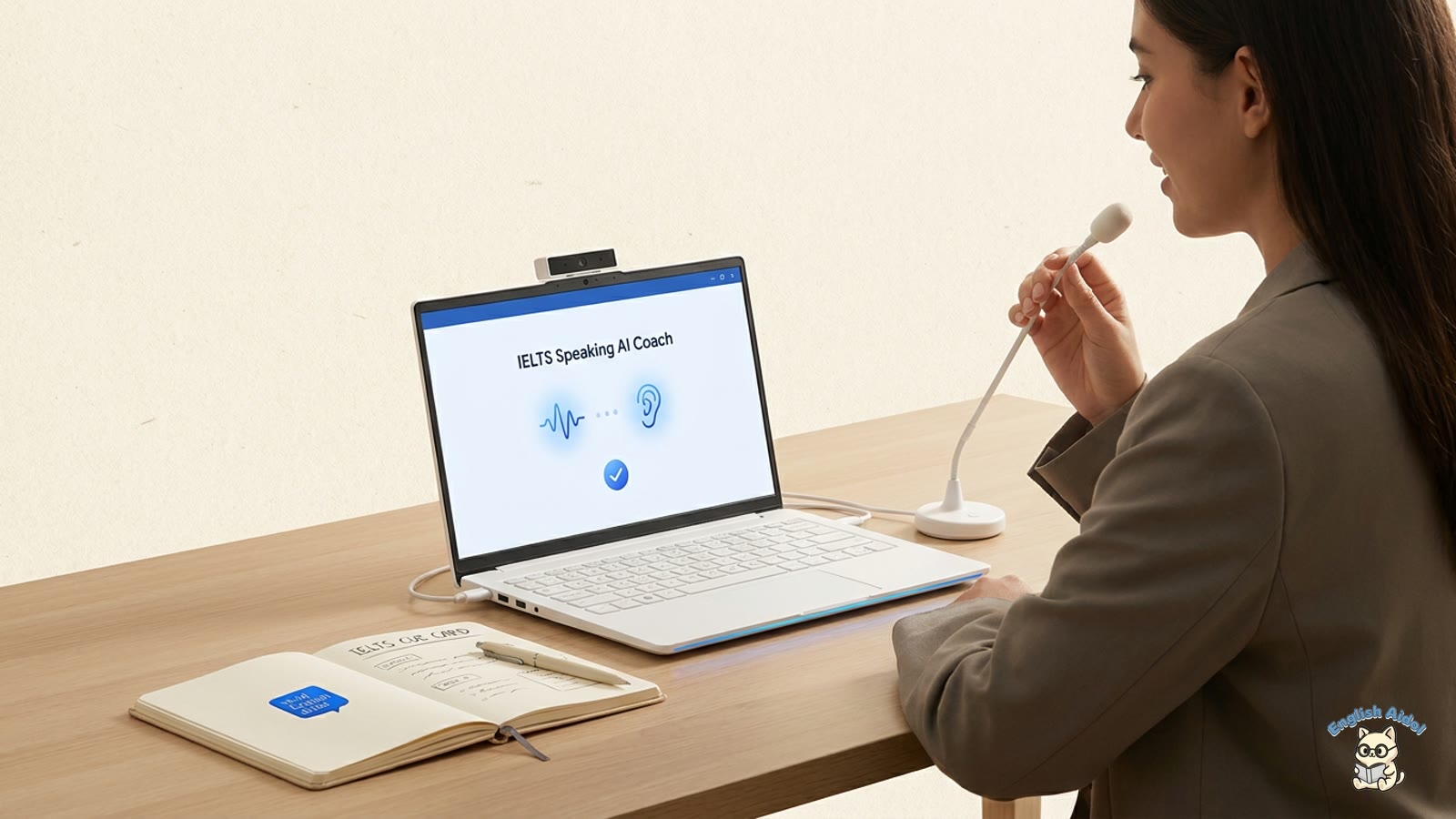
> Dành 2 phút ghi âm câu trả lời của bạn. Upload lên English AIdol, AI sẽ chấm chi tiết theo rubric Cambridge 2026, chỉ ra lỗi phát âm cụ thể và gợi ý từ vựng nâng band ngay lập tức.
---
---
1. Tôi có cần nói đúng 2 phút không? Không bắt buộc. Giám khảo chấm chất lượng ngôn ngữ, không tính thời gian chính xác. Tuy nhiên, 1 phút 45 giây là ngưỡng an toàn để thể hiện đủ chi tiết mà không bị ngắt giữa chừng.
2. Có nên dùng từ vựng học thuật cho IELTS Speaking không? Chỉ dùng khi phù hợp ngữ cảnh. IELTS Speaking ưu tiên tính tự nhiên. Dàn từ vựng "formal" quá mức sẽ bị đánh giá là memorized. Hãy ưu tiên collocation và phrasal verbs.
3. Nếu tôi quên từ vựng giữa chừng thì sao? Đừng im lặng. Dùng chiến lược circumlocution: mô tả đặc điểm, chức năng hoặc cảm giác của từ đó (e.g., "It's the thing you use to...", "You know, the machine that..."). Điều này tăng điểm Fluency & Lexical Resource.
4. Bài mẫu này có áp dụng được cho các đề khác không? Chắc chắn. Khung câu chuyện (Setting → Conflict → Intervention → Reflection) linh hoạt cho nhiều chủ đề Part 2 như: describe a helpful person, a time you solved a problem, hoặc a memorable meeting.
5. English AIdol chấm Speaking có giống giám khảo thật không? Hệ thống sử dụng mô hình AI được huấn luyện trên 10,000+ bài thi thật, phân tích theo 4 tiêu chí Cambridge: Fluency/Coherence, Lexical Resource, Grammatical Range, Pronunciation. Kết quả báo cáo chi tiết từng lỗi và gợi ý sửa ngay lập tức.