IELTS Speaking Part 3: Travel Benefits Discussion Questions
Related guides:
Official 2026 IELTS Speaking Part 3 Exam Format
The 2026 IELTS Speaking test includes:
- Part 3 duration: 12-15 minutes (unchanged from 2025)
- Part 3 question types: Abstract/analytical discussion of real-world topics related to Part 2
- Travel benefits: Common Part 2 topics that lead to Part 3 discussion
- Scoring criteria: TR (Task Response), CC (Coherence & Cohesion), LR (Lexical Resource), GRA (Grammatical Range & Accuracy)
Full Prompt: Travel Benefits Discussion
Examiner: "In your opinion, what are the most significant benefits of international travel? How has technology changed the way people experience travel?"
Model Answers at Different Bands
Band 6.0 Answer
Candidate: "Well, I think travel is good because you can see new places. Maybe you meet people from different countries. I like when I can try new food. Technology helps because you can use your phone to find good restaurants. Maybe you can use Google Maps to not get lost. I think travel is better now than before."
Scoring Breakdown:
- TR 5.0: Presents a basic discussion but with limited development
- CC 5.0: Some logical sequencing but frequent repetition and basic connectors
- LR 5.0: Limited range of vocabulary with frequent repetition
- GRA 6.0: Occasional complex sentence forms but frequent errors
Band 7.0 Answer
Candidate: "International travel offers numerous benefits. Firstly, it broadens our perspectives by exposing us to different cultures, which can challenge our preconceived notions. For example, traveling to Japan taught me about the importance of politeness in their culture, which I hadn't fully appreciated before. Technologically, apps like Duolingo have made language learning more accessible, enhancing our ability to communicate with locals. Additionally, platforms like Airbnb allow travelers to experience authentic local living, which was more difficult before the digital age."
Scoring Breakdown:
- TR 7.0: Presents a clear position with relevant, extended and supported ideas
- CC 7.0: Logical organization with clear progression and effective cohesive devices
- LR 7.0: Uses a mix of less common and common vocabulary skillfully
- GRA 7.0: Uses a mix of simple and complex sentence forms with some errors
Band 8.0 Answer
Candidate: "The advantages of international travel extend far beyond mere recreation. Culturally, it fosters mutual understanding and tolerance by allowing us to immerse ourselves in diverse traditions. The rise of virtual reality tourism, for instance, has made cultural exchange more accessible than ever, though it can't fully replicate the sensory experiences of physical travel. Economically, technology has democratized travel by enabling price comparisons through aggregator websites and providing real-time translation services that facilitate navigation in foreign environments. However, this digital dependency raises concerns about over-reliance on technology at the expense of authentic human interaction."
Scoring Breakdown:
- TR 8.0: Presents a clear, detailed position with extended and supported ideas
- CC 8.0: Logical organization with effective use of cohesive devices
- LR 8.0: Uses a wide range of vocabulary with less common lexical items
- GRA 8.0: Uses a wide range of complex sentence forms with frequent error-free sentences
Band 9.0 Answer
Candidate: "International travel, in its myriad forms, serves as a catalyst for personal growth and global cohesion. The anthropological perspective asserts that cross-cultural exposure cultivates cognitive flexibility, a trait increasingly valued in our interconnected world. Technological innovations have revolutionized the travel experience - consider how AR navigation apps overlay historical context onto modern cityscapes, transforming urban exploration into an educational journey. Moreover, the sharing economy has democratized access to authentic cultural experiences through platforms that connect travelers with local hosts. However, we must critically examine the digital divide that may exacerbate inequalities in travel accessibility, as technological advancements often benefit urban, tech-savvy populations more than rural communities."
Scoring Breakdown:
- TR 9.0: Presents a fully developed position with relevant, extended and supported ideas
- CC 9.0: Logical organization with effective use of cohesive devices
- LR 9.0: Uses a wide range of vocabulary with full flexibility and precision
- GRA 9.0: Uses a wide range of complex sentence forms with full flexibility and precision
Essential Vocabulary for Travel Benefits Discussion
High-Level Nouns
- Cultural exchange (noun): The process of sharing cultural values and practices
- Example: "Travel facilitates cultural exchange through direct interaction"
- Perspective-taking (noun): The ability to understand someone else's viewpoint
- Example: "International travel enhances our capacity for perspective-taking"
- Digital divide (noun): The gap between those with and without access to digital technology
- Example: "The digital divide affects access to travel information and services"
- Anthropological perspective (noun): The study of humans and human behavior
- Example: "From an anthropological perspective, travel fosters cultural adaptation"
- Sensory experience (noun): The way we perceive the world through our senses
- Example: "Travel offers unique sensory experiences that can't be replicated digitally"
High-Level Verbs
- Immerse (verb): To involve oneself deeply in a particular activity or culture
- Example: "Travel allows us to immerse ourselves in different cultures"
- Facilitate (verb): To make something easier or more likely to happen
- Example: "Technology facilitates travel planning and navigation"
- Exacerbate (verb): To make a problem worse
- Example: "Technology can exacerbate inequalities in travel access"
- Transform (verb): To change something significantly
- Example: "Technology transforms the way we experience travel"
- Cultivate (verb): To develop or improve a quality or skill
- Example: "Travel cultivates cultural awareness and tolerance"
High-Level Adjectives
- Interconnected (adjective): Having or involving a complex system of connections
- Example: "In our interconnected world, travel is more important than ever"
- Authentic (adjective): Of undoubted authenticity; genuine
- Example: "Technology helps travelers access more authentic experiences"
- Multifaceted (adjective): Having many different aspects or features
- Example: "Travel offers multifaceted benefits for personal growth"
- Ubiquitous (adjective): Present, appearing, or found everywhere
- Example: "Smartphone technology is now ubiquitous in travel"
- Contextual (adjective): Relating to or providing background information
- Example: "AR apps provide contextual information about historical sites"
High-Level Collocations
- Cultural exchange (noun) + facilitate (verb)
- Example: "Technology facilitates cultural exchange through instant translation"
- Perspective-taking (noun) + enhance (verb)
- Example: "Travel enhances our ability to engage in perspective-taking"
- Digital divide (noun) + exacerbate (verb)
- Example: "The digital divide exacerbates inequalities in travel access"
- Anthropological perspective (noun) + assert (verb)
- Example: "From an anthropological perspective, travel affirms our shared humanity"
- Sensory experience (noun) + replicate (verb)
- Example: "Virtual reality can't fully replicate the sensory experience of travel"
Common Mistakes in Travel Benefits Discussion
- Overgeneralizing: Making broad statements without supporting evidence (e.g., "All travel is good")
- Ignoring technological impacts: Failing to address how technology changes travel experiences
- Superficial discussion: Only talking about personal benefits without deeper analysis
- Repetition: Using the same vocabulary and ideas throughout the response
- Lack of balance: Only discussing positive aspects without acknowledging potential drawbacks
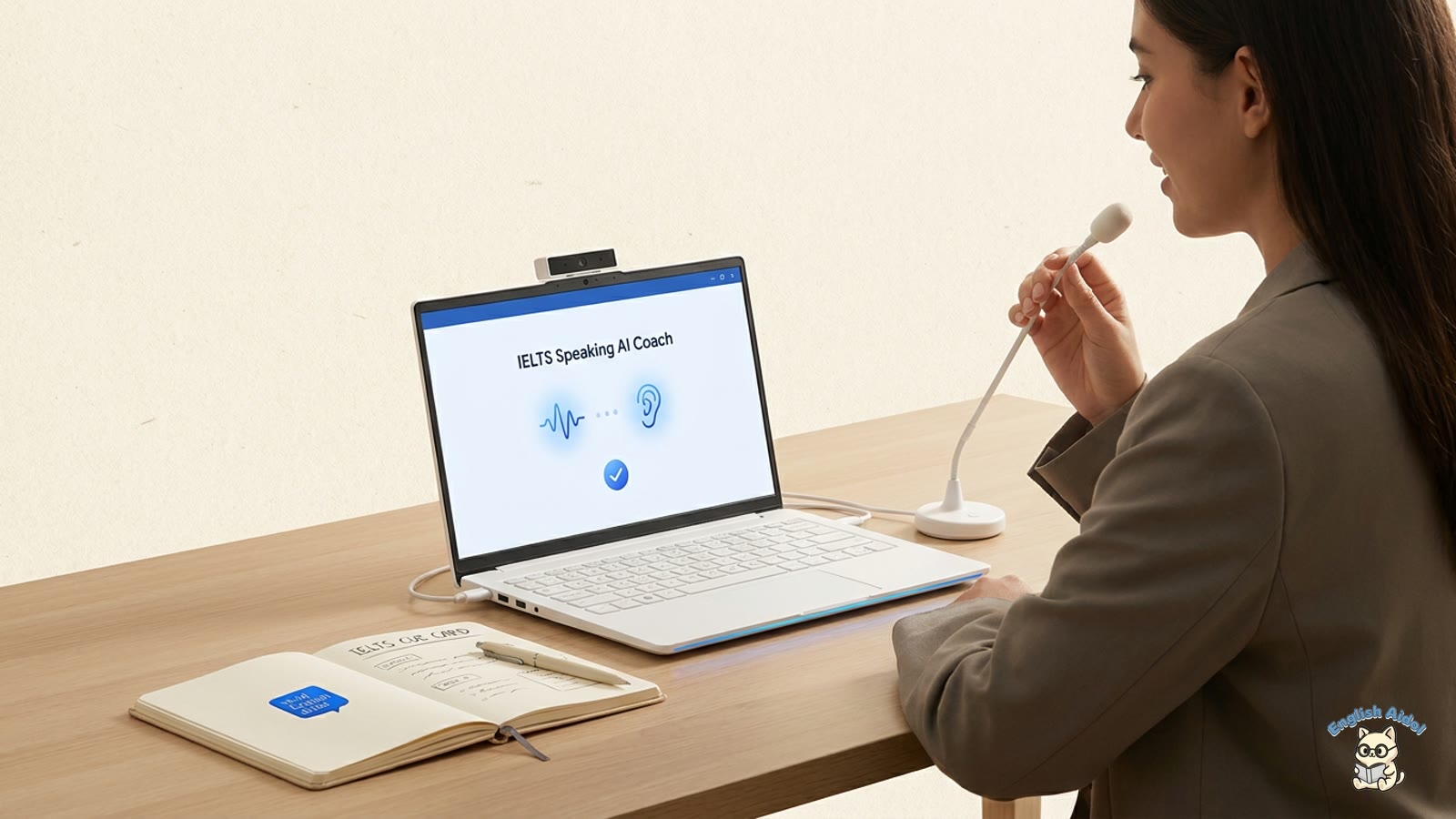
Get Your Own Response Scored by AI on English AIdol
Practice with real-time feedback using our AI scoring tool modeled on IELTS Speaking criteria. Get personalized tips to improve your fluency, lexical range, and grammatical accuracy for IELTS Speaking Part 3.